Sincere love: from hearts' remembrance to the work of limbs
Contents
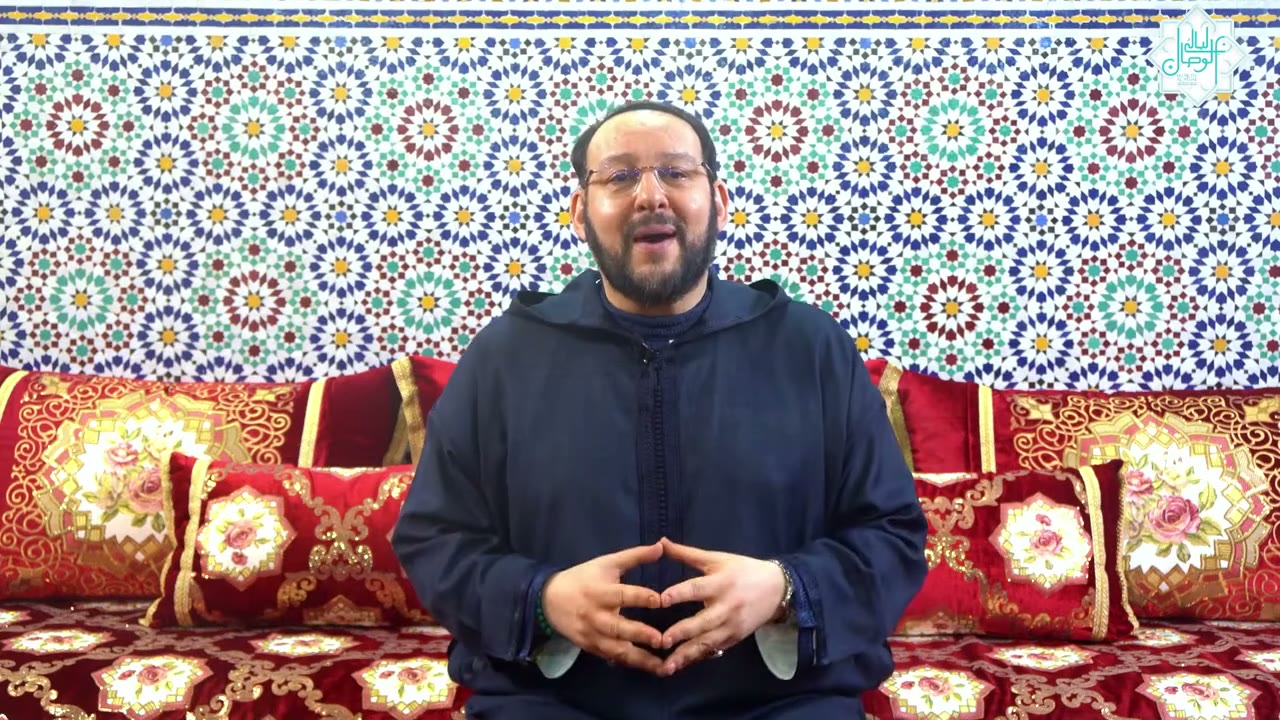
A teaching of Sidi Mounir al-Qadiri Boutchich, shaykh of the path, delivered in Arabic and broadcast in episode 330 of the series Layali al-Wissal (‘The Nights of Union’), on 25 October 2026 on the channel of the Al Moultaqa Foundation. Announced by the host under the title ‘Sincere love: from hearts’ remembrance to the work of limbs’.
Extract of 12 min 35 s (01:06:19 to 01:18:54). Original full video: Layali al-Wissal, episode 330, Al Moultaqa Foundation channel.
Literal translation of the teaching (from the Arabic)
A literal, word-for-word translation as far as English allows; the article below presents its meaning and structure.
“In the name of God, the All-Merciful, the Most Merciful. Praise be to God, who has made of His love a light for hearts, of His remembrance the life of souls, and of pious work a path toward His pleasure, and who has opened to His servants the doors of repentance and hope. Prayers and blessings upon our lord Mohammed, who taught us how to love God and His Messenger, and how to transform love into rectitude and excellence, and upon his family, his companions and those who walk on his guidance until the Day of Retribution.
After that: my lords and ladies, people of union. Among the prophetic hadiths that open the doors of hope in hearts and reveal the greatness of love in the life of the believer, there is the word of the Messenger of God, may prayer and blessings be upon him, when a man asked him: ‘When will the Hour be, O Messenger of God?’ The Prophet said to him: ‘What have you prepared for it?’ The man said: ‘I have not prayed much, fasted or given alms, but I love God and His Messenger.’ The Prophet said to him: ‘You will be with those you love.’ The hadith was reported by Anas ibn Malik, may God be pleased with him. We were never more joyful of anything than of the Prophet’s word, may prayer and blessings be upon him: ‘You will be with those you love.’ Consider, people of union, this great prophetic answer: the man came to ask the moment of the establishment of the Hour, which is an invisible matter that none knows save God; the most noble Prophet, may peace and blessings be upon him, oriented him toward what matters: ‘What have you prepared for it?’ As though He were transporting him from the occupation with, or the concern for, what he does not possess the knowledge of, toward the attention to what he possesses the power to change: from the question of the moment to preparation, from waiting for the future to effort in the present. And behold, each of us must ask himself: how much time do we spend thinking of what will happen tomorrow, recalling what we do not master, while we postpone repairing what we can repair in ourselves? And how much do we occupy ourselves with the moment of the establishment of the Great Hour, forgetting that each has an appointment that is not late, a deadline that will come without fail: the hour of departure from this lower world. The true believer does not fear death for itself: he prepares to meet his Lord through pious work and a good end. And the Messenger of God said: ‘He who loves to meet God, God loves to meet him; and he who hates to meet God, God hates to meet him’, for sincere love pushes the believer toward preparation, not toward heedlessness. And in another hadith, the Prophet said: ‘No one will enter Paradise by his deeds, not even you, O Messenger of God: nor I, he said, unless God envelops him in His grace and His mercy.’ The Prophet thus showed that work is cause and path, but that true triumph is in God’s mercy and grace: let man not be proud of his work nor despair of his insufficiency, but let him unite effort and humility, the hope that it comes from Him. It is an educational method that aims at renewing sincerity for God and purifying the soul of pride and ostentation: the servant does not see for himself a merit in pious work and does not rely on his work to obtain salvation or the stations; he contemplates God’s grace and His assistance, at the beginning as at the end. God said: ‘I desire only good as much as I can; my success comes only from God: in Him I place my trust and to Him I turn.’ In his version: O the beloved ones, when the man said ‘I love God and His Messenger’, the Prophet did not ask of him a long list of works nor close before him the door of hope because of what he mentioned of the weakness of supererogatory works: he announced to him the good news ‘You will be with those you love’. And this is not a call to content oneself with love and dispense with work: it is a manifestation of what sincere love is and of what it opens of doors of hope in God’s mercy and generosity. For sincere love is not a word the tongue repeats alone: it is an inclination of the heart whose effect appears in choice and conduct. ‘He who loves God loves what brings Him closer to Him, and he who watches over His obedience is ashamed to persist in what angers Him; and he who loves the Messenger of God follows his guidance, takes on his characters, has mercy on people, speaks truth in his word, keeps his commitments and is generous toward those around him.’ And the Prophet said to Abu Dharr al-Ghifari, may God be pleased with him: ‘Do not belittle any good deed, even meeting your brother with a cheerful face.’ The Prophet thus forbade belittling any pious work, however small or simple it may be in man’s eyes: the good word, the cheerful face, the small service, the good conduct, all this is gates of good and signs of the sincerity of love: the love of God and His Messenger, and the love of good for all people.
And so that the question of love may lead us directly to the question of pious work, let us question our souls: what has our love changed in our life? Has it made us truer toward our own, more merciful toward the weak, more faithful to commitments, further from injustice and backbiting? Has it pushed us to return trusts and perfect responsibilities? For the sign of love is not that we speak much of it in words, but that we see its effects in our character and our dealings: these are the fruits of worship, the effects of good conduct and Muhammadan character. The Companions rejoiced greatly at this hadith, for they understood that the Prophet’s company in the hereafter is not the monopoly of those who lived a long apparent life: sincere love is a high station. And this hope must not push us toward more laziness nor make us think ill of God, nor distance us from ourselves: we hope for God’s mercy, we work for His pleasure, we acknowledge our insufficiency, we renew our repentance each time we fall short, and we ask Him ceaselessly for more. For contentment with God is a deprivation, as they say. People of union, we are an education in remembrance, in love and in virtuous companionship; it guides us toward this delicate balance: a heart attached to God, a tongue moist with His remembrance, limbs that work in good. The aim of remembrance is not to abandon life’s responsibilities, but to fulfil them with a more present heart, a more appeased soul and a more upright character; and the aim of love is not to remain an inner feeling, but to transform into mercy, truthfulness, faithfulness, excellence, good conduct, good word and good for all. From this we understand the meaning of the good life: it is not necessarily a life free of difficulties, nor a life where man possesses all he desires; it is a life where one finds meaning in what one does, a serenity drawn from faith, a divine acceptance that brings peace in trials, and a hope that pushes to continue the effort. God said in His Book: ‘Whoever does a righteous deed, man or woman, and is a believer, We will surely grant him a good life’, surah an-Nahl. The good life is linked to faith and pious work, and appears in the appeasement of the heart, the benefit of people and good conduct with what one possesses and what one is tried by: may we be grateful to God in ease as in difficulty, grateful at every moment and in every situation. And wisdom says: ‘Work for your life here below as though you were to live eternally, and work for your future life as though you were to die tomorrow’: it is a wisdom that calls us to the balance between building and planning the future, and between working in good without postponing repentance. And the Prophet expressed this meaning in a hadith reported by Anas, may God be pleased with him: ‘The Hour is established while one of you holds a young shoot of palm; if he can plant it, let him plant it’, reported by the imam Ahmad in his Musnad and by al-Bukhari in al-Adab al-Mufrad. The young shoot is the small stem of the palm, the young palm-shoot: in the hadith, even in the densest of moments, pious work, the development of the land and production remain; let us cling to hope and exert effort, without giving ourselves over to despair or discouragement, without suspending the work whatever the circumstances. And behold, we arrive at our responsibility toward our beloved homeland, Morocco: in sincere love, it does not remain an abstract feeling; it transforms into service and giving. And just as the love of God and His Messenger had to appear in our character, the love of the homeland must appear in our deeds: in the truthfulness of the employee, in the seriousness of the student, in the loyalty of the entrepreneur and the cooperation of the citizen, in the respect for the rights of others, in the sincerity of everyone who works and of every person in charge. Every useful work we accomplish with sincerity, every problem to the solution of which we contribute, every knowledge we put at the service of people, every trust we keep, is a brick in the building of a rising Morocco and a better Morocco. My lords and ladies, people of union, this hadith taught us that love is a great door of hope, that preparation for the hereafter begins in our life of today, and that the path toward the good life passes through faith and pious work. Let us not wait for tomorrow to begin; let us not belittle the small work: let us make of every glance and every breath an occasion to draw near to God through good conduct, pious work and excellence toward our own and His creatures, and through distancing from all that harms creatures; and let us distance ourselves from the discourse of hatred: let us rather spread the discourse of love and purity. May God grant us His love and the love of His Prophet, may prayer and blessings be upon him; may He make our love sincere, appearing in our works and our character; may He fix our gaze on His remembrance, His gratitude and the beautiful practice of His worship; and may He make us those who listen to the word and follow the best of it, and who work in good seeking Your pleasure. Grant us a good life in this lower world and a good end at departure, victory through Your mercy and Your pleasure, and the company of Your Prophet, may prayer and blessings be upon him, in the gardens of bliss. O God, grant success to our families, to our society, to our homeland and to this government, the Moroccan government that His Excellency King Mohammed has appointed, presided over by this good woman; may He make her accomplished, working with sincerity, loyalty and excellence, and bless her efforts for reform and good, so that she may be a prosperous government, for good, reform and rectitude; and bless the efforts of all those who work for good and reform. Make Morocco a safe, peaceful, united and flourishing country; make of our country, Morocco, the country of religion and the rest of the needy and the poor; protect our borders, O You Most Merciful of the merciful, and protect all the countries of Muslims. O God, protect the amir al-mu’minin, His Excellency King Mohammed VI, with long life, health and well-being, and support him through success and rectitude, and extend over him health and well-being; unite him to His Royal Highness the crown prince Moulay El Hassan; and support His Royal Highness Prince Moulay Rachid; and protect all the members of the noble royal family; and protect all Muslims, and make of them those who spread the Islam of love, mercy, coexistence, peace and security. O God, spread security and peace upon the earth, and protect us from trials and conflicts. And pray, O God, upon the lord Mohammed ibn ’Abd Allah, the dignitary of God, who never tasted a hardship without God having eased it for him, and upon his family and his companions. And praise be to God, O Lord of the worlds.”
The hadith that turns the question round
The teaching opens on a hamdala that already gives the programme: God has made of His love a light for hearts, of His remembrance the life of souls, of pious work a path toward His pleasure, and has opened to His servants the doors of repentance and hope. Sidi Mounir addresses the ‘people of union’ and cites the hadith that opens the doors of hope: a man came to ask the Prophet, peace and blessings be upon him, ‘when will the Hour be?’, a question about an invisible matter that none knows save God. The Prophet oriented him differently: ‘What have you prepared for it?’ The man answered that he had done little prayer, fasting and almsgiving, ‘but I love God and His Messenger’. And the Prophet said to him: ‘You will be with those you love’ (Sahih al-Bukhari 6171, Sahih Muslim 2639; reported by Anas ibn Malik).
Anas ibn Malik recounted that the Companions were never more joyful of anything than of this word. The speaker draws the lesson: the prophetic answer shifts attention from what one does not possess the knowledge of (the moment of the Hour) toward what one has the power to change: preparation. Each has an appointment that is not late, the hour of departure from this lower world; the true believer does not fear death for itself, he prepares to meet his Lord through pious work and a good end (‘He who loves to meet God, God loves to meet him’, Sahih al-Bukhari 6174, Sahih Muslim 2637).
Work is path, not merit
Here comes the first balance of the teaching. In another hadith, the Prophet says: ‘No one will enter Paradise by his deeds, not even you, O Messenger of God: nor I, he said, unless God envelops him in His grace and His mercy’ (Sahih Muslim 2816). Work is cause and path; triumph is in God’s mercy. Let man therefore not be proud of his work nor despair over his own insufficiency, but let him unite effort and humility. It is a method that renews sincerity for God and purifies the soul of pride and ostentation: the servant sees no merit for himself in pious work and does not rely on it for salvation; he contemplates God’s grace at the beginning as at the end (‘I desire only good as much as I can; my success comes only from God’, surah Hud, 11:88).
And the Prophet did not ask this man for a long list of works: he did not close the door of hope because of the weakness of supererogatory works. He announced the great good news. It is not a call to dispense with work: it is the manifestation of what sincere love is and of the doors of hope it opens.
What love changes
Sincere love does not lie in a word the tongue repeats. It is an inclination of the heart whose effect appears in choice and conduct. ‘He who loves God loves what brings Him closer to Him, and he who watches over His obedience is ashamed to persist in what angers Him; and he who loves the Messenger of God follows his guidance, takes on his characters, has mercy on people, speaks truth in his word, keeps his commitments and is generous toward those around him.’ And the Prophet said to Abu Dharr al-Ghifari: ‘Do not belittle any good deed, even meeting your brother with a cheerful face’ (Sahih al-Bukhari 2626, Sahih Muslim 2626).
The question of love therefore leads directly to that of work: what has our love changed in our life? Are we truer toward our own, more merciful toward the weak, more faithful to commitments, further from injustice and backbiting? Returning trusts and perfecting responsibilities are fruits of worship. The Companions rejoiced greatly at this hadith: the Prophet’s company in the hereafter is not the monopoly of those who lived a long life in this world; sincere love is a high station.
From hearts’ remembrance to the work of limbs
The education to which Sidi Mounir invites, remembrance, love, virtuous companionship, sketches a balance: a heart attached to God, a tongue moist with His remembrance, limbs that work in good. The aim of remembrance is not to abandon life’s responsibilities, but to fulfil them with a more present heart and a more upright character; the aim of love is not to remain an inner feeling, but to transform into mercy, truthfulness, faithfulness, excellence, good word.
From this one understands the hayat tayyiba, the good life: not a life free of difficulties nor a life where one possesses all one desires, but a life where one finds meaning in what one does, a serenity drawn from faith, a divine acceptance that brings peace in trials, and a hope that pushes to continue the effort. ‘Whoever does a righteous deed, man or woman, and is a believer, We will surely grant him a good life’ (surah an-Nahl, The Bees, 16:97). And popular wisdom says: ‘Work for your life here below as though you were to live eternally, and work for your future life as though you were to die tomorrow’: the balance between building the future and not postponing repentance.
The teaching continues with the hadith of the young shoot: ‘The Hour is established while one of you holds a young shoot of palm; if he can plant it, let him plant it’ (Musnad Ahmad 12512; al-Adab al-Mufrad, reported by al-Bukhari). Even in the densest of moments, pious work, the development of the land and production remain: let us cling to hope and exert effort, without giving ourselves over to despair or discouragement, without suspending the work whatever the circumstances.
The love of the homeland as work
Here comes the concrete application: in sincere love, it does not remain an abstract feeling, it transforms into service and giving. Just as the love of God and His Messenger had to appear in character, the love of one’s country must appear in deeds: the truthfulness of the employee, the seriousness of the student, the loyalty of the entrepreneur and the cooperation of the citizen, the respect for the rights of others. ‘Every useful work we accomplish with sincerity, every problem to the solution of which we contribute, every knowledge we put at the service of people, every trust we keep, is a brick in the building of a rising Morocco and a better Morocco.’
The closing prayer
The teaching closes on a long invocation that sums up the whole matter: may God grant His love and the love of His Prophet, may He make this love sincere, appearing in works and character; may He fix our gaze on His remembrance and His gratitude; may He make us those who listen to the word and follow the best of it, and who work in good seeking His pleasure. May He grant a good life in this lower world and a good end at departure, victory through His mercy, and the Prophet’s company in the gardens of bliss.
Then the speaker prays for his own and for the country: success for families, society, the homeland and the Moroccan government, which he describes as headed by a woman; may it be a prosperous government for good, reform and rectitude; may Morocco be a safe, peaceful, united and flourishing country, ‘the country of religion and the rest of the needy and the poor’; may He protect the borders and all the countries of Muslims. He prays at length for the amir al-mu’minin, King Mohammed VI: long life, health and well-being, support through success and rectitude, union with the crown prince Moulay El Hassan and Prince Moulay Rachid, protection of the whole royal family and of all Muslims, a call to spread ‘the Islam of love, mercy, coexistence, peace and security’, then security and peace on earth and protection from trials and conflicts.
The intervention ends on the final prayers for the Prophet, ‘he who rises for the right of God, who never tasted a hardship without God having eased it for him’, and the hamdala: ‘Praise be to God, O Lord of the worlds.’
This closing prayer joins the French side of the same vigil, where Sidi Mounir treats virtuous companionship: sincere love from the hadith there becomes brotherhood, and the work of limbs is there named service of the brothers. For context, Sidi Mounir al-Qadiri Boutchich is the shaykh of the Tariqa Qadiriya Boutchichiya; Dr Abd al-Wahhab al-Filali’s talk on the Moulidiyat and Federico Salvaggio’s talk on spiritual and temporal order are part of the same episode 330.
Frequently asked questions
Which hadith opens the teaching?
A man asked the Prophet: 'When will the Hour be?' He answered: 'What have you prepared for it?' The man said he had done little prayer, fasting and almsgiving, 'but I love God and His Messenger'. The Prophet said to him: 'You will be with those you love' (Sahih al-Bukhari 6171, Sahih Muslim 2639).
Why did the Prophet not ask for more works?
He did not draw up a long list of practices nor close the door of hope because of the weakness of supererogatory works: he announced the great good news 'you will be with those you love'. Work remains the path, but salvation belongs to God's mercy and decree, not to the sole measure of human labour.
How does one recognise sincere love?
Not by a word repeated by the tongue, but by an inclination of the heart that appears in choices: loving what brings one near to God, watching over obedience, following the Prophet's model, having mercy on people, speaking truth, keeping one's commitments and not belittling the smallest good deed, 'even meeting your brother with a cheerful face' (Sahih al-Bukhari 2626, Sahih Muslim 2626).
What link does the teaching make between love and patriotism?
As the love of God and of the Prophet must appear in character and deeds, the love of one's country must appear in service: honesty of the employee, diligence of the student, seriousness of the entrepreneur, cooperation of the citizen and respect for others' rights, 'brick by brick' in the building of a better Morocco.