The tranquillity of the heart: entrusting the whole affair to God
Contents
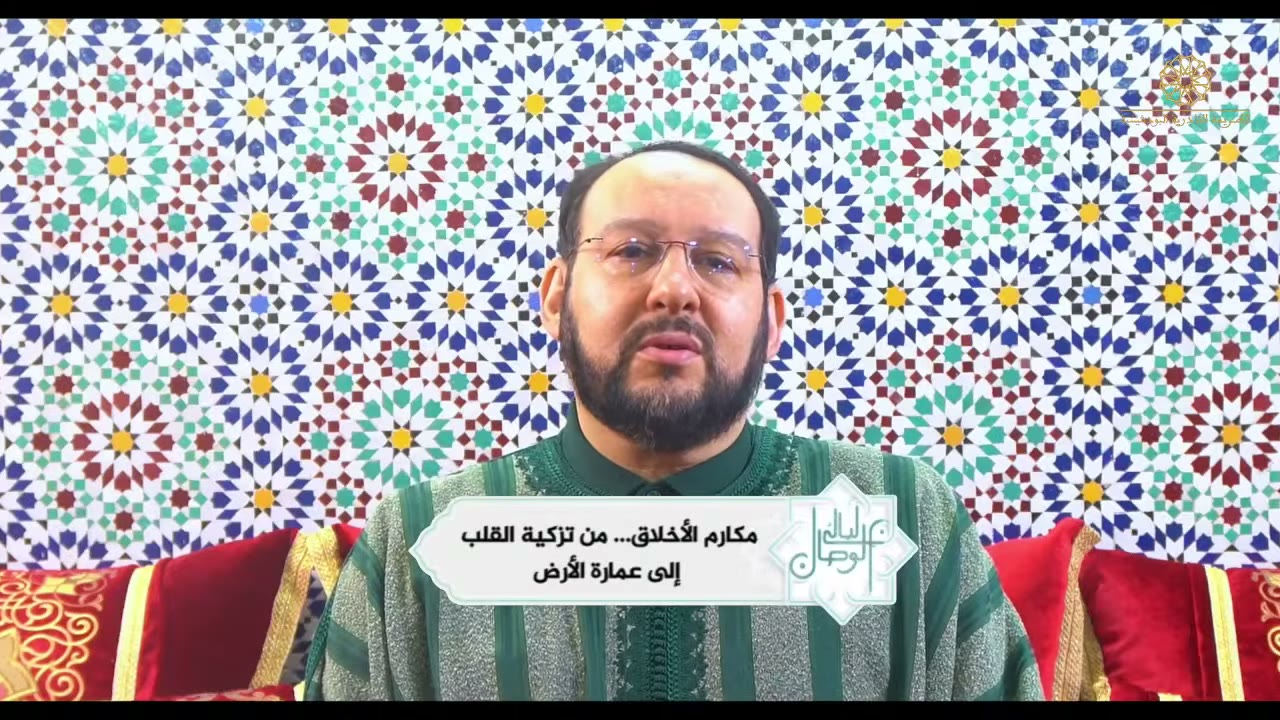
A teaching by Sidi Mounir al-Qadiri Boutchich, shaykh of the path, taken from episode 327 of the series Layali al-Wissal (‘The Nights of Communion’), broadcast on 4 October 2026 on the channel of the Al Moultaqa Foundation. Delivered in Arabic; accompanying text written by the editorial team.
Extract of 13 min 06 s (00:45:10 → 00:58:16). Original full video: Layali al-Wissal, episode 327, on the Al Moultaqa Foundation channel.
Literal translation of the address (from the Arabic)
As the address is delivered in Arabic, here is its literal translation into English, from end to end. The article below presents its meaning and structure; this text follows the discourse word for word, from the opening hamdala to the final salutation.
’In the name of God, the All-Merciful, the Most Merciful.
Praise be to God, who holds in His hand the dominion of all things and to whom all affairs return, who has made reliance upon Him a rest for hearts and entrustment to Him a serenity for the believers. May prayer and peace be upon our master Muhammad, who taught his community the beautiful reliance and guided it to trust in God whilst taking the means; and upon his family, his companions and those who follow his way until the day of judgement.
To proceed, ladies and gentlemen, beloved ones, O people of communion: among the greatest meanings that sow serenity in the believer’s heart is that he should know with certainty that God, glorified and exalted, is the Wakil over all things, and that when the servant entrusts his affair to Him, his heart is soothed in the One in whose hands the whole affair lies. God, exalted, said: ‘And God is over all things Wakil.’ The Wakil is the one who takes charge of the affair of him who rests upon Him, who keeps him, manages his affairs and embraces all his states. If God, glorified and exalted, is the Wakil over all things, then nothing in this universe escapes His management, and no movement takes place beyond His knowledge, His will and His power.
That is why entrusting one’s affair to God is an immense gate of tranquillity and certainty in God, exalted: for the heart, once it knows that its affair is in His hands, no longer remains a prisoner of the fear of the unknown, of anxiety before what has not yet come to pass, or of regret over what has gone.
Beloved ones: man often fears things; he fears illness, he fears difficulty in his provision, he fears the future, he fears that the means may fail; and he carries a care he cannot master, as though he were being asked to manage everything by himself. Yet tawhid teaches us that the causes do not act independently of their Causer, and that things possess over their own affair nothing beyond the properties that God has deposited in them, under His management, glorified and exalted, and His will. Did He not make the fire coolness and peace for our master Abraham, peace be upon him? Did He not make the sea a path of salvation for His prophet Moses, peace be upon him, and his people? The causes are great in proportion to the benefit God has deposited in them, but they never act independently of God and His will, glorified and exalted, for a single instant.
Tawakkul, ladies and gentlemen, is neither the abandonment of the causes nor the surrender of helplessness; it is taking the causes while knowing that the outcome is in the hand of the Causer of causes. Tawakkul is to keep your heart attached to the Wakil, glorified be He, and not to the means. Work, act, take the causes, but do not make your heart their prisoner. Strive in seeking your provision and in redressing injustice; be productive, active in your society; but do not believe for a moment that your provision and your success are in the hands of people: they are in the hands of God, glorified and exalted. ‘Tie her and trust in God’, as the hadith has it. Work for the future, but do not let the fear of the future rob you of the tranquillity of your present. Deploy your effort, then entrust your affair to God: for what God has written for you will not miss you, and what He has not written for you, you will not attain with the strength of all creatures gathered together. As God, glorified and exalted, says: ‘And I entrust my affair to Allah; surely Allah sees the servants.’
The Prophet, may God’s peace and blessings be upon him, said in his exhortation to ’Abd Allah ibn ’Abbas, may God be pleased with them both: ‘Know that if the jinn and men were to gather to benefit you with something, they would benefit you only with what God has written for you; and if they were to gather to harm you with something, they would harm you only with what God has written against you. The pens have been lifted and the pages have dried.’
And it is reported of the learned Sufi al-Hasan al-Basri, may God have mercy on him, concerning attachment to what benefits: ‘When I knew that my provision would be taken by no one else, my heart was soothed; and when I knew that my work would be accomplished by no one else, I applied myself to it alone.’ And it is a great word of education: that the heart rests upon what it possesses neither the benefit nor the harm of, that it occupies itself with that towards which it has a way, and that it entrusts all that exceeds this to the Lord, mighty and exalted.
Ladies and gentlemen: in the march of the authentic and upright Qadiriya Boutchichiya path, we lived, after the passing of our shaykh and our father, the knower of God Moulay Jamal al-Din, may God sanctify his secret, a trial that was not easy. It had to test the sincerity of the companionship, the stability of hearts, the faithfulness of the disciples to the testaments of their shaykhs; to test the values of loyalty and sincerity towards the pledge; to test also the stability of the path’s foundations, through the unleashing of lies and the race to spread calumnies, allegations and falsehoods. They forgot the word of the Messenger of God, peace be upon him: ‘The Muslim is he from whose tongue and hand the Muslims are safe, and the emigrant is he who leaves what God has forbidden’, an authentic hadith reported by al-Bukhari and Muslim. And Sufism is all character, all manners; Sufism is to clothe oneself in every beautiful character and to leave aside every base one. Such is the way of the Sufi masters and of our shaykhs in spiritual education, in guidance towards God and in beautiful manners.
’Abd Allah ibn ’Umar said: I saw the Messenger of God, peace be upon him, circling the Ka’ba and saying: ‘How agreeable you are, and how agreeable your fragrance; how great you are, and how great your sanctity. By Him who holds the soul of Muhammad in His hand, the sanctity of the believer before God is greater than your sanctity: his property, his blood, and that only good be thought of him.’ A hadith reported by Ibn Majah and at-Tabarani: proof that the sanctity of the believer before God is greater than the sanctity of the Ka’ba.
Now at that time, the noble men and noble women, the faithful disciples, the sincere and the steadfast, in the country and abroad, held to what they had received from their shaykhs in education, in recommendations, in excellence and in knowledge; they thought well of God and entrusted their affair to Him; they did not make the disturbance of circumstances a cause of disturbance for hearts, but made of reliance a motive of constancy, faithfulness and service. The affairs of our blessed path pursued their way of love and the continuation of the work in calm, decency and sincerity; and in the shade of its faithful sons, by God’s grace, they strive with earnestness and devotion in the service of their king and their homeland, and in safeguarding what has been entrusted to them: the secret of the authorised Muhammadan divine dhikr, far from the clamour and the tittle-tattle, preferring action to speech, constancy to impulse, and a good opinion of God to the occupation with what divides hearts. And praise be to God, this spirit has borne brilliant results and achievements. And the people of love spoke truly when they said: ‘Whoever takes refuge in you, O best of men in nobility, God is his guardian against every avenger.’
Thus the wayfarer learns that solicitude does not mean the absence of trials, but that the heart remains soothed in God in the midst of the trial; that we should make of the trial a divine gift; and that man finds in hardship what strengthens him, and in the closing of certain doors what impels him towards other doors that God opens for him where he expected nothing.
Beloved ones: a great part of man’s anxiety comes from his attempting to carry what is beyond his reach: he wants to control the outcomes, the people, the future and the circumstances, and he forgets that above all management stands the management of the Creator, the Originator, glorified and exalted, the All-Compassionate, the All-Giving. That is why it has been said: do not think that your management of yourself is better than God’s management of you. When this meaning settles in the heart, the believer no longer lives a prisoner of anxiety.
Beloved ones: the summit of reliance is to know that divine solicitude does not mean awaiting deliverance without striving; the sincerity of reliance is that man discharges what he can of his duty, takes the causes, deploys his effort in the reform of himself, in the service of people and in the building of the earth. And it is of this meaning that we stand most in need, as we are engaged in our homeland in great works and growing challenges for the benefit of our country, in this Morocco, the Sharifian Kingdom, the Morocco on the rise that needs earnestness and mastery: the demands of organising the 2030 World Cup open a vast field of work and responsibility; likewise the consolidation of the social state and the achievement of social and territorial justice; all of this calls for men and women who believe that reliance does not exempt from work, and that love of one’s country is expressed through effort, responsibility and excellence in one’s post. It is not reliance that we should wish our country well without working for it; reliance is that we deploy all our power from our post, then entrust the affair to God and content ourselves with what He decrees after having deployed what we could.
Ladies and gentlemen: this education, which makes the believer able to bear responsibility and sustain it, steadfast in hardships, is what the authentic Sufi paths have embodied, linked by their chains of transmission throughout their march and their history, and by their recommendations and their foundations established in the religion: they have made purification a path towards the building of man, dhikr a spur to the work, and the moral demand a foundation of right action, supporting the pillars of the good life, serving society, in faithfulness to the homeland and attachment to the religious and national constants, in the shade of the Commander of the Faithful, far from excess, quarrels and tittle-tattle. For veracious Sufism increases the believer only in humility, in proximity to God, in benefit and in kindness towards creatures.
O God, grant us the sincerity of reliance upon You, the good entrustment to You, confidence in Your good management and the tranquillity of the heart in Your remembrance; and do not let our hearts become attached to the causes rather than to the Causer of causes. O God, grant us earnestness in the work and sincerity in the service of Your servants and Your country; make us keys of goodness, beneficial wherever we may be.
O God, protect the Commander of the Faithful, His Majesty King Mohammed VI; support him with success and guidance; clothe him in the garment of health and ease; gladden his eye with the crown prince, His Royal Highness the noble prince Moulay El Hassan; make him for him a good growth, and strengthen him through his felicitous brother, His Royal Highness Prince Moulay Rachid; protect all the members of the Cherifian royal family. O God, protect our country Morocco; perpetuate upon it the bounties of security, safety, unity and stability; make our country a country of religion and an ease for the needy and the poor; grant it success in what makes for the good of the country and the servants; bless its march of development; guide its sons towards what makes for its reform and its prosperity; protect all the lands of the Muslims; spread Your mercy, peace and security; keep wars and conflicts away from us on this earth and in this world of ours in which we live; make us people of peace, coexistence, security and safety.
And may God pray upon our master Muhammad, by whom knots are untied, distresses dispelled, needs fulfilled, desires obtained and good endings reached, and by whom the clouds give rain on account of his noble face; and upon his family and companions at every moment and every breath, to the number of Your knowledge. Glory to your Lord, the Lord of might, above what they describe; and peace upon the messengers; and praise be to God, the Lord of the worlds.’
Fear of illness, of hardship, of the future, of the means failing: man carries a care he cannot master, as though he were being asked to manage everything by himself. It is on this diagnosis that the teaching of Sidi Mounir al-Qadiri Boutchich, shaykh of the path, opens, delivered in Arabic on 4 October 2026 in episode 327 of the Layali al-Wissal gatherings of the Al Moultaqa Foundation. The remedy has a name: tawakkul, the heart’s reliance upon God, summed up in the announced title of the address, ‘the tranquillity of the heart when the servant entrusts his whole affair to God’.
The Wakil, the one who takes charge of everything
First support, the divine name around which the whole discourse turns. Surah az-Zumar, The Groups (39:62), says: ‘Allah is the Creator of all things, and He is Guardian over all things.’ The Wakil, the teaching explains, is the one who takes charge of the affair of him who rests upon Him, who keeps him, manages his affairs and embraces all his states. The consequence follows directly: if nothing in the universe escapes this management, if no movement takes place beyond His knowledge, His will and His power, then entrusting the affair (tafwid) becomes the gate of tranquillity. The heart that knows where its affair lies ceases to be the prisoner of three chains: fear of the unknown, anxiety before what has not yet come to pass, regret over what has gone.
The causes never work alone
Tawhid settles the misunderstanding that feeds worry: the causes do not act independently of their Causer. Things possess of their own affair only the properties that God has deposited in them. And the examples are drawn from prophetic memory: the fire that becomes, by God’s command, ‘coolness and safety’ for Abraham (al-Anbiya’, 21:69), the sea split into a path of salvation for Moses and his people (ash-Shu’ara’, 26:63). A cause is worth only what God has placed in it; it never emancipates itself from His will, not for an instant.
Take the means, entrust the outcome
The teaching then dismisses the two lazy readings of tawakkul. It is not the abandonment of the means, nor the surrender of helplessness. It is taking the causes while knowing that the outcome is in the hand of the Causer of causes; it is keeping the heart attached to the Wakil, not to the means. The instruction becomes concrete: work, seek one’s provision, redress injustice, be productive in one’s society, without believing for a moment that provision or success are in the hands of people. ‘Tie her and trust in God’, the hadith of the camel reported by at-Tirmidhi reminds us: tying the mount is man’s part, trust the heart’s.
Then comes the argument that cuts through rumination: exert yourself fully, then entrust your affair to God, for what God has written for you will not miss you, and what He has not written for you will not be obtained by the strength of all creatures gathered together. Sidi Mounir quotes the word of the believer in surah Ghafir (40:44), ‘I entrust my affair to Allah’, then the Prophet’s exhortation to Ibn ’Abbas (at-Tirmidhi 2516): were the whole community to gather to benefit or to harm, it would do so only within what is written; the pens have been lifted, the pages have dried. And al-Hasan al-Basri’s word, which serves as method: ‘When I knew that my provision would be taken by no one else, my heart was soothed; when I knew that my work would be accomplished by no one else, I applied myself to it alone.’
The trial of the path, put into practice
The teaching then takes an unusual turn: it leaves the register of principle for that of lived history. After the passing of Sidi Jamal al-Din al-Qadiri Boutchich, may God sanctify his secret, the Qadiriya Boutchichiya path went through a trial that was not easy: calumnies, allegations, falsehoods, testing the sincerity of the companionship, the stability of hearts and the faithfulness of the disciples to the testaments of their shaykhs. Faced with this, Sidi Mounir recalls two beacons. The prophetic word reported by al-Bukhari and Muslim: ‘The Muslim is he from whose tongue and hand the Muslims are safe, and the emigrant is he who leaves what God has forbidden.’ And the hadith of the Ka’ba, reported by Ibn Majah and at-Tabarani: the sanctity of the believer before God exceeds that of the House, his property, his blood, and the good opinion owed to him.
The response of the faithful, the path and its sons ‘in the country and abroad’, holds in a chain of attitudes that the discourse details: holding to what was received from the shaykhs in education and knowledge, thinking well of God, entrusting Him the affair, not turning the disturbance of circumstances into a disturbance of hearts, and making reliance a motive of constancy, faithfulness and service. The consequence, according to the teaching: the path pursued its way of love and work in quietness, far from noise and rumour, preferring action to speech and a good opinion of God to the occupation with what divides.
The lesson of this history exceeds its context. Divine solicitude does not mean the absence of trials: it means that the heart remains soothed in God in the midst of the trial. To make of hardship a source of strength, to read in closed doors the impulsion towards other doors that God opens where one expected nothing.
The poison of control
Why does anxiety return? Because man attempts to carry what is beyond his reach: he wants to control the outcomes, the people, the future, the circumstances, and he forgets that above all management stands the management of the Creator, the All-Compassionate, the All-Giving. The maxim retained by the discourse deserves to be quoted as it stands: ‘Do not think that your management of yourself is better than God’s management of you.’
Tawakkul becomes work
A final movement, the most unexpected for whoever imagines trust in God as an inner retreat: it is paid for in work. Divine solicitude does not mean awaiting deliverance without striving. Sincere reliance passes through duty fulfilled, means taken, effort spent on the reform of self, the service of people and the building of the earth.
And the application is immediate: Morocco’s undertakings, from the organisation of the 2030 World Cup to the consolidation of the social state and territorial justice, call for men and women for whom love of the homeland is expressed through effort, responsibility and excellence in the post occupied. Wishing one’s country well without working for it is not reliance; giving one’s utmost from one’s post, then entrusting the affair to God and accepting what He decrees, is. This is the pedagogy that the authentic Sufi paths have carried throughout their history, the teaching sums up: purification as a path towards the building of man, dhikr as a spur to the work, the moral demand as the foundation of right action; all of it far from excess, quarrels and gossip, for ‘veracious Sufism increases the believer only in humility, in proximity to God, in benefit and in kindness towards creatures’.
The closing prayer
The teaching ends in supplication: that God grant the sincerity of reliance, the good entrustment, confidence in His management and the tranquillity of the heart in His remembrance; that He make of the listeners ‘keys of goodness, beneficial wherever they may be’. Then comes, as is customary in these gatherings, the du’a for the Kingdom of Morocco, His Majesty King Mohammed VI, the crown prince Moulay El Hassan, Prince Moulay Rachid and the Alawite royal family, then for peace and coexistence on the whole earth.
Take the means, keep the heart with the Causer: the formula holds in a single line, its practice occupies a lifetime. To go further along the path that teaches this wayfaring, the presentation of the Tariqa Qadiriya Boutchichiya locates the transmission, and the neighbouring teaching of Honour and Steadfastness, drawn from the following episode, extends the same point on the believer’s dignity in trial. The frequently asked questions on Sufism answer the first steps.
Teaching by Sidi Mounir al-Qadiri Boutchich in Layali al-Wissal no 327 (Al Moultaqa Foundation), address in Arabic bounded from 45:10 to 58:16. Article written from the transcription cross-checked with the source’s automatic translation track; quotations faithfully reported in sense, references verified in the working file.
Frequently asked questions
What is tawakkul?
Tawakkul is the heart's reliance upon God: taking the means in earnest while knowing that the outcome belongs to the Causer of causes. For Sidi Mounir al-Qadiri Boutchich, it is neither the abandonment of means nor passivity, but the heart's attachment to the Wakil, the Trustee, rather than to the means.
Which Qur'anic verse grounds reliance upon God?
Surah az-Zumar (39:62): 'Allah is the Creator of all things, and He is Guardian over all things'; and surah Ghafir (40:44): 'I entrust my affair to Allah; surely Allah sees the servants.'
Does tawakkul exempt one from working?
No. Sidi Mounir says it plainly: awaiting deliverance without striving is not reliance. The believer fulfils his duty, takes the means, exerts himself in his own reform, in service to people and in building the earth, then entrusts the affair to God.
Which hadith illustrates trust in God?
The Prophet's exhortation to Ibn 'Abbas, reported by at-Tirmidhi (2516): were the whole community to gather to benefit you, they would benefit you only with what God has written for you; the pens have been lifted and the pages have dried.