Spiritual and moral education, from the sincerity of orientation to the excellence of action
Contents
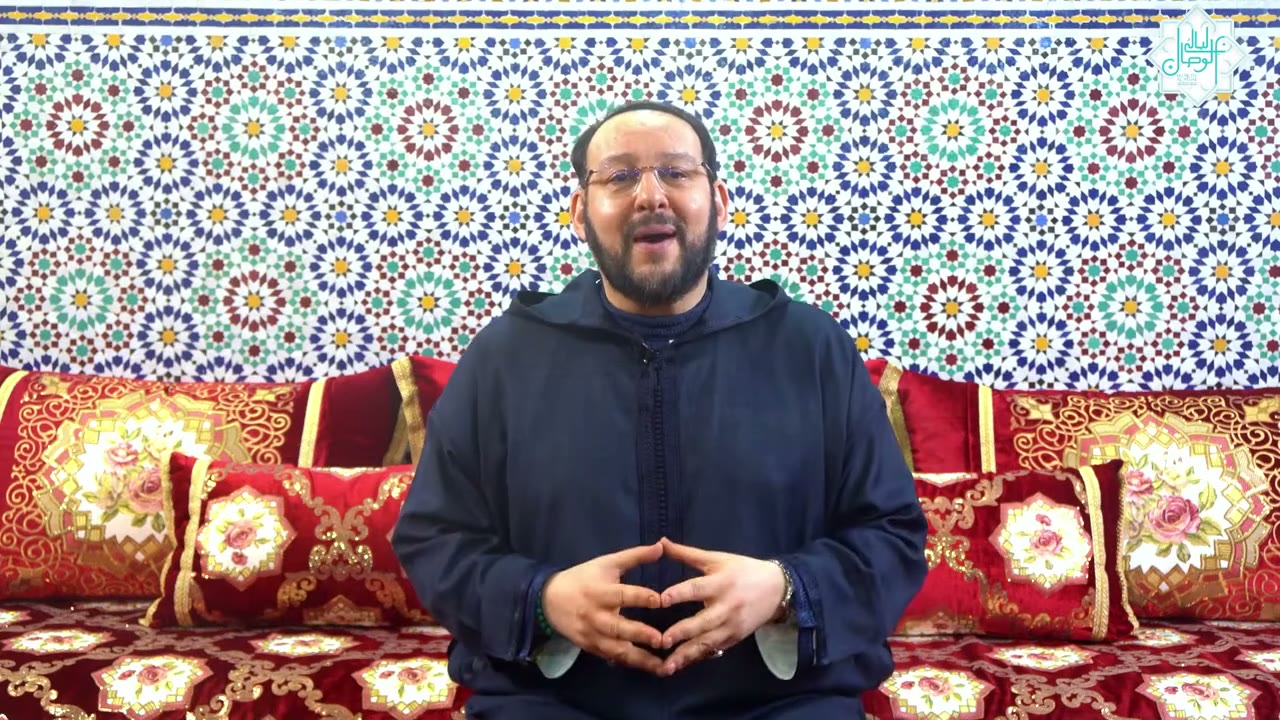
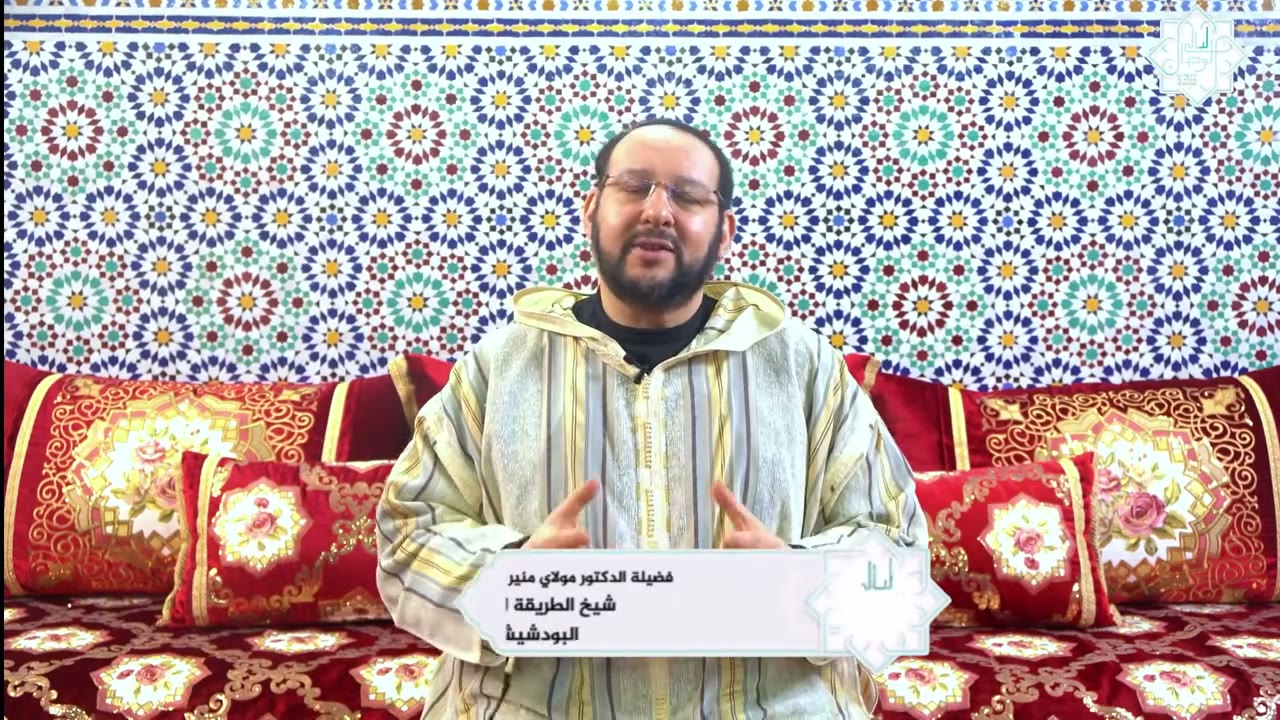
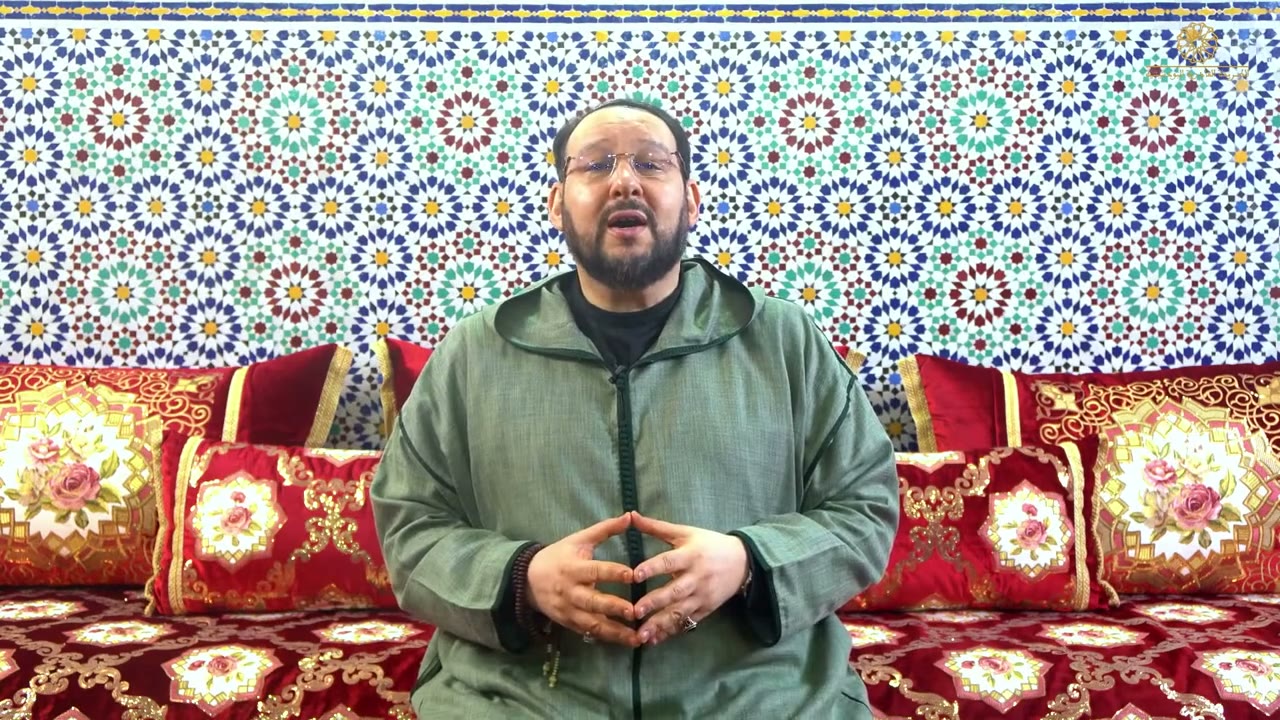
A teaching of Sidi Mounir al-Qadiri Boutchich, shaykh of the path, delivered in Arabic and broadcast in episode 329 of the series Layali al-Wissal (‘The Nights of Union’), on 18 October 2026 on the channel of the Al Moultaqa Foundation.
Extract of 9 min 35 s (00:51:53 to 01:01:28). Original full video: Layali al-Wissal, episode 329, Al Moultaqa Foundation channel.
Literal translation of the teaching (from the Arabic)
A literal, word-for-word translation as far as English allows; the article below presents its meaning and structure.
“In the name of God, the All-Merciful, the Most Merciful. Praise be to God, to Whom belong the keys of success, through Whom hearts are oriented, souls are appeased and steps are set right. We praise Him, the Most High, for the blessings with which He has filled us, and we ask Him for help for righteous deeds. And we ask Him to make our beginnings sincerity, our effort a blessing, and our ends satisfaction and acceptance. Prayers and blessings upon our lord Mohammed, who guided his community toward the gates of good and raised it upon the sincerity of orientation and the excellence of work, and upon his family, his companions and those who follow his way until the Day of Retribution.
After that: my lords and ladies, people of union. The human being, every time he advances toward a new stage of his life, sees before him the anxieties renewed and the multitude of his aspirations; he needs what fixes him, fixes his heart, illumines his way and helps him to choose well. But the question we must ask ourselves is not only: what do we want to achieve? It is also: with what intention do we strive, with what morals do we work, and toward what end do we direct ourselves? A man can succeed in reaching the goals of worldly aspiration, yet lose on the way his sincerity, or his honesty, or his inner peace. And his work can be small in people’s eyes, yet great through its sincerity, its benefit for others and its disinterestedness toward God. We do not ask God for bare success; we ask Him for the best of successes; we do not ask Him only for the abundance of work, but for work accepted by His pleasure. We ask Him for the faith He will realise in our hearts and the constancy that will help us continue on the way. And behold, we understand that asking for God’s help and invocation do not replace work: they are the spirit of work and its support. We turn to God through our hearts, then we take the means, we tend the management, we exert effort, and we entrust Him with the results. We sow the seeds with sincerity and perfection, we water them with patience and trust, and we know that germination and fruit are in His hand. Results can be late, our path can meet difficulties, affairs may not come in the form we wished. But the believer does not make of this a cause for despair, rupture or stagnation: he reviews his intention, he sets his work right, he implores the help of his Lord, and he continues his course. For every delay is not a deprivation, and every trial is not a sign of failure. There can be in the way an education for the soul, a teaching of patience and an occasion to review one’s aims.
People of union, the foundation of this course is sincerity (al-ikhlas): that our aim be God’s pleasure, and not the seeking of people’s praise. That we work in secret as we work in public, that we keep the trust even if no one watches us, that we acknowledge error rather than justify it, and that we rejoice in God’s help and His gracious disposal. Everything the Beautiful does is beautiful; what is not for guidance breaks, and what is not for God is cut off and separated. Sincerity in work preserves its possessor from becoming a prisoner of people’s gaze or their judgments: if he errs, he returns, implores forgiveness, as it is reported in the saying: ‘Hold yourselves to account before you are held to account.’ And if he falls short, let him renew his determination, let him not make his fall a permanent dwelling; and may his loss after that not be a loss.
Spiritual and moral education, for Sufism, is the maqam of ihsan, excellence. It teaches that the visible is the sign of the hidden: whoever has a pure heart has a pure intention. If the heart is purified of envy, of spite and of the seeking of others’ gaze, and filled with sincerity and love of good, this is reflected in light, serenity and good conduct, in good relations and fine deeds. It is an education that shows itself in the details of daily life: it is not a matter of speaking of humility, but of being humble; nor of brandishing the watchword of honesty, but of accomplishing it with sincerity and truth; nor of speaking of service to people, but of stepping forward in it without expecting praise or recompense. The more a man makes supplications to God, the more he must grow in sincerity, humility and mercy; and the truer his love, the more its effect must appear in the safeguarding of rights, faithfulness to commitments and ihsan toward creatures. As the Prophet, peace and blessings be upon him, says in the authentic hadith: ‘The Most Merciful has mercy on those who are on earth, so He will have mercy on you who are in heaven.’
One of the greatest fields of this good and of this work according to these aims is the service of our homeland. From the person in charge who fulfils his duty with humility and honesty, from the employee who respects people’s time and strives to serve them, from every man who understands that the value of responsibility lies in the fulfilment of the trust, and not in appearances, the love of display, the seeking of praise and reputation: love of the homeland is not proved by slogans alone, but by work, excellence, honesty, the safeguarding of the public good, respect for the law, the safeguarding of public funds, service to citizens and the priority of the general interest over narrow interests. Each of us can contribute according to his place. The sustainable development our homeland seeks needs science and competence, but it also needs morals: competence without honesty can harm, and good intention without accomplished work does not realise what we hope. God, blessed be He, said in His Book: ‘Do whatever you will; God will see your deeds, and His Messenger and the believers.’ The pious work is not confined to acts of worship alone: it includes every useful work in which responsibility is fulfilled with sincerity, in which people’s rights are respected and in which the public interest is sought. If the intention is pure and the work right, professional and social responsibility can become a door of nearness to God and of service to the country and to God’s servants, for the most pleasing of people to God is the most beneficial to people, as it is reported in the authentic hadith. Let us therefore make of our education a provision for conduct, of our supplication a spur to excellence, of our love an engine of service to people; let us begin with ourselves, let us repair what we can repair, let us fulfil the duties incumbent on us, and let us despise no small work if it is sincere and useful: homelands are not built by slogans, but by firm and continuous steps. We invoke God with hearts full of hope, we strive with labouring hands, we conduct ourselves with good morals, and we implore patience when the way grows hard. Let us make of each day a step toward God, of each work an occasion of sincerity, of each relation a field of mercy and of each responsibility a door of service to the homeland and to humankind. O God, we ask You for the good of asking, the good of supplication, the good of success, the good of work, the good of reward, the good of life and the good of death; grant us acceptance, guide us in balance, realise our wishes, raise our degrees, accept our prayer, forgive our faults, and grant us the high degrees of Paradise and the loftiest degrees of Paradise.
O God, protect the Commander of the Faithful, the holder of the glorious throne, Mohammed VI; clothe him in the robe of health and safeguarding, support him with success and uprightness, and extend over him the grace of health and safeguarding. Strengthen the eye of His Royal Highness the crown prince, Prince Moulay El Hassan, and strengthen him by the support of His Royal Highness Prince Moulay Rachid; protect the other members of the Sharifian royal family. O God, protect our country Morocco and make of our country a country of religion, of mercy for the needy and the poor; extend over it the grace of security, safety, unity and stability; bless it in its path of development, guide its government toward what is good, guide its sons and daughters toward what is good for the country and for God’s servants. And protect the other Muslim countries, reconcile their hearts, avert from them trials, manifest and hidden. Our Lord, accept us: You are the One who hears and knows; and turn to us in repentance: You are the One who accepts repentance, the Most Merciful. Prayers and blessings upon our lord Mohammed, the true fulfilment of God: when a matter constricts, God loosens it; and upon his family and all his companions. And praise be to God, Lord of the worlds. May the peace, the mercy of God and His blessings be upon you.”
The teaching of Sidi Mounir opens on a solemn hamdala: ‘Praise be to God, to Whom belong the keys of success, through Whom hearts are oriented, souls are appeased and steps are set right.’ He asks that beginnings be sincerity, that effort be blessing, that ends be satisfaction and acceptance. Then he addresses the ‘people of union’ (ahl al-wissal), the very audience of the Layali al-Wissal vigil.
The real question is not ‘what do you want?’ but ‘with what intention?’
The starting point is psychological before it is doctrinal: at each new stage of life, man sees his anxieties renewed and his aspirations multiply. He needs what fixes him, what lights his way and helps him choose well. But the question to ask is not only what one wants to achieve: it is also with what intention one strives, with what morals one works, toward what end one directs oneself.
The warning is concrete: one can succeed in reaching the goals of this world and lose on the way one’s sincerity, one’s honesty or one’s inner peace. Conversely, a work small in people’s eyes can be great through its sincerity, its benefit for others and its disinterestedness toward God. ‘We do not ask God for success for its own sake,’ he says, ‘we ask Him for the best of successes; we do not ask Him only for the abundance of work, but for work accepted by His pleasure.’
Dhikr is not a substitute for work
The teaching’s most compressed passage comes down to one sentence, midway through: ‘asking for God’s help and invocation do not replace work; they are the spirit of work and its support’. What follows sketches the whole method: turn to God through our hearts, then take the means, tend the management, exert effort, and entrust the results to Him. Sow with sincerity and perfection, water with patience and trust, know that germination is in God’s hand.
Results can be late, the way can grow hard, affairs may not come as hoped: the believer does not make of this a cause for despair. ‘Every delay is not a deprivation, and every trial is not a sign of failure.’ Along the way there is an education for the soul, a teaching of patience, an occasion to review one’s aims.
Ihsan, foundation of the education
The doctrinal base is named: ‘Sufism, for spiritual and moral education, is the maqam of ihsan.’ Ihsan, for the masters, designates the worship of God as though one saw Him, or at the very least the consciousness that God sees us. From this follows the principle: the visible is the sign of the hidden; whoever has a pure heart has a pure intention. To purify the heart of envy, of rancour and of the seeking of others’ gaze, and to fill it with sincerity and love of good, this is reflected in light, serenity and good conduct.
The education is verified in the details of daily life: ‘it is not a matter of speaking of humility, but of being humble; nor of brandishing the watchword of honesty, but of accomplishing it with sincerity; nor of speaking of service to people, but of stepping forward in it without expecting praise or recompense.’ The more supplication grows, the more sincerity, humility and mercy must grow; the truer the love, the more its effect must appear in the safeguarding of rights, faithfulness to commitments and ihsan toward creatures.
The service of the homeland as a field of worship
The second half of the teaching moves from principle to Moroccan reality. The greatest field of this work, he says, is the service of the homeland: the person in charge who fulfils his duty with humility and honesty, the employee who respects people’s time and strives to serve them, every man who understands that the value of responsibility lies in the fulfilment of the trust. ‘Love of the homeland is not proved by slogans alone,’ he says, ‘but by work, excellence, honesty, the safeguarding of the public good, respect for the law, the safeguarding of public funds, service to citizens and the priority of the general interest over narrow interests.’
The demonstration is logical: the sustainable development Morocco seeks needs science and competence, but it also needs morals, for ‘competence without honesty can harm, and good intention without accomplished work does not realise what we hope’. He then cites verse 105 of surah at-Tawba (The Repentance, 9:105): ‘Do whatever you will; God will see your deeds, and His Messenger and the believers.’ The pious work is not confined to acts of worship: it includes every useful work in which responsibility is fulfilled with sincerity.
And the hadith of al-Tirmidhi (no. 2321, hasan) seals the link: ‘The closest of people to God is the most beneficial to people.’ If the intention is pure and the work right, professional and social responsibility becomes a door of nearness to God and of service to the country. ‘Let us make of our education a provision for conduct, of our supplication a spur to excellence, of our love a driving force in the service of people; let us begin with ourselves.’
The royal prayer and the close
The extract ends on a long invocation that descends from the spiritual plane to the national plane: the asking for good, success, work and life; then the prayer for the Commander of the Faithful Mohammed VI, the crown prince Moulay El Hassan and Prince Moulay Rachid; the request that Morocco be ‘a country of religion, of mercy for the needy and the poor’; the protection of the other Muslim countries. The closing hamdala (‘praise be to God, Lord of the worlds’) and the final salam close the teaching.
What gives this teaching its density is its economy: the sincerity of orientation (sidq al-tawajjuh) is not a private inner disposition, it is verified in work, in service, in daily responsibility. The path does not ask one to leave the world to draw near to God; it asks one to make of every work, every relation, every duty a field where ihsan is proved. To hear the other side of this education, Sidi Mounir’s teaching on ‘Honour and Constancy’ shows the same demand of the upright heart; a dhikr session is its practice; the presentation of the Tariqa Qadiriya Boutchichiya situates the way.
Frequently asked questions
What is the foundation of spiritual education according to this teaching?
Ihsan, excellence: Sufism is the maqam of ihsan, and spiritual education begins by purifying the heart of hasad (envy), ghill (rancour) and riya’ (seeking the gaze of others), then by filling the intention with sincerity and love of good.
What does Sidi Mounir say about the relation between invocation and work?
Dhikr is not a substitute for work but its spirit and its support: ‘we turn to God through our hearts, then we take the means, we tend the management, we exert effort, and we entrust Him with the results’.
Which hadith grounds the service of the homeland in this teaching?
‘The closest of people to God is the most beneficial to people’ (al-Tirmidhi, no. 2321, hasan): professional and social responsibility then becomes a door of nearness to God and of service to the country and to creatures.
How does sincerity free the servant from the gaze of people?
By making God’s pleasure the sole end: whoever acts for people’s praise becomes their prisoner; whoever acts for God, if he errs, returns, implores forgiveness and renews his determination. The hadith ‘hold yourselves to account before you are held to account’ (al-Bayhaqi, Shu’ub al-iman) sums up this vigilance.
Frequently asked questions
What is the foundation of spiritual education according to this teaching?
Ihsan, excellence: Sufism is the maqam of ihsan, and spiritual education begins by purifying the heart of hasad (envy), ghill (rancour) and riya' (seeking the gaze of others), then by filling the intention with sincerity and love of good.
What does Sidi Mounir say about the relation between invocation and work?
Dhikr is not a substitute for work but its spirit and its support: 'we turn to God through our hearts, then we take the means, we tend the management, we exert effort, and we entrust Him with the results'.
Which hadith grounds the service of the homeland in this teaching?
'The closest of people to God is the most beneficial to people' (al-Tirmidhi, no. 2321, hasan): professional and social responsibility then becomes a door of nearness to God and of service to the country and to creatures.
How does sincerity free the servant from the gaze of people?
By making God's pleasure the sole end: whoever acts for people's praise becomes their prisoner; whoever acts for God, if he errs, returns, implores forgiveness and renews his determination. The hadith 'hold yourselves to account before you are held to account' (al-Bayhaqi, Shu'ub al-iman) sums up this vigilance.