Honour and constancy: the dignity of the believer in the face of trial
Contents
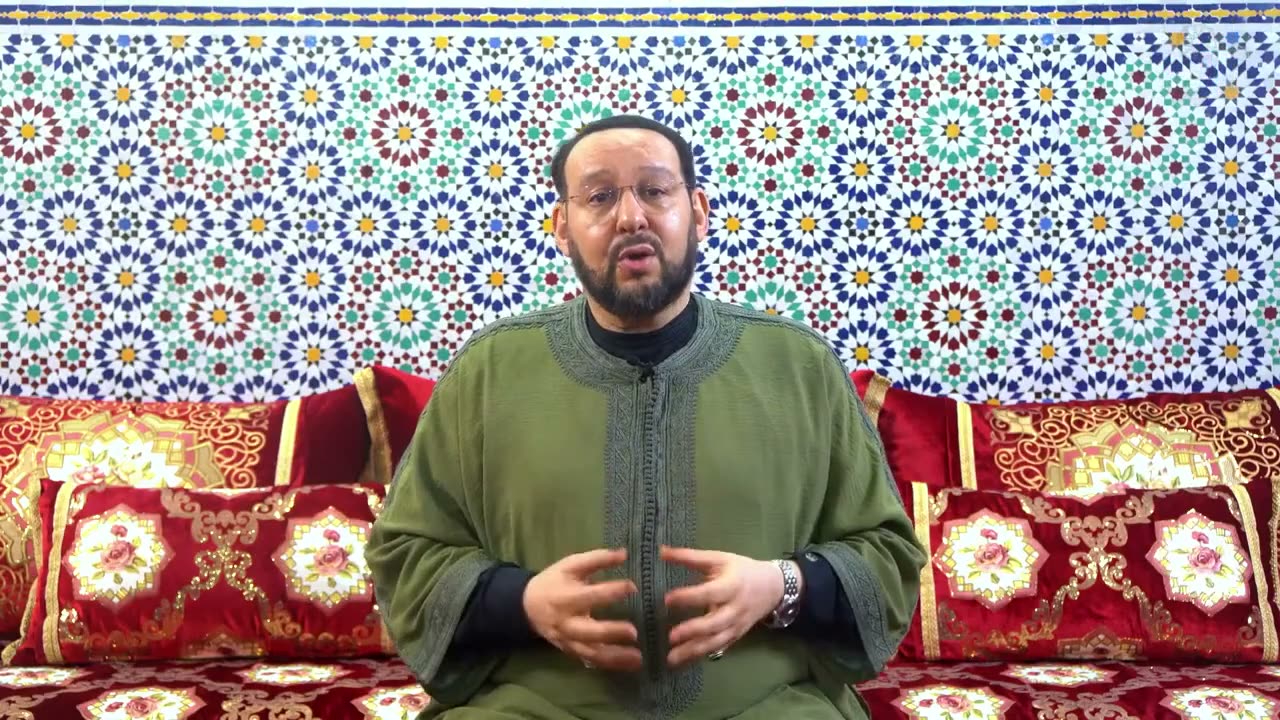
A teaching of Sidi Mounir al-Qadiri Boutchich, shaykh of the path, taken from episode 328 of the series Layali al-Wissal (‘The Nights of Union’), broadcast on 11 October 2026 on the channel of the Al Moultaqa Foundation. Accompanying text written by the editorial team.
Extract of 6 min 36 s (01:35:25 to 01:42:01). Original full video: Layali al-Wissal, episode 328, Al Moultaqa Foundation channel.
What is a human being worth in the eyes of God? The question is direct, and so is the answer. Sidi Mounir al-Qadiri Boutchich, shaykh of the path, opens with a verse that fixes the measure, then a hadith that shifts everything: the sanctity of the believer exceeds that of the holiest House on earth.
‘We have honoured the children of Adam’: the measure fixed by the Qur’an
Surah al-Isra’, The Night Journey (17:70), declares: ‘Indeed, We have honoured the children of Adam. We carried them on land and sea, provided them with good things, and markedly preferred them above many of Our creatures.’
The honour is no vague promise. It is stated as accomplished: God has already conferred it. Carriage on land and sea, pure sustenance, preference over a great part of creation. And the teaching insists on one point: this honour has a measure. It can be carried, honoured, squandered.
Before the Ka’ba: the believer more sacred than the House
Abdullah ibn Omar, may God be pleased with him, relates a scene he saw with his own eyes. The Prophet, may God’s peace and blessings be upon him, was circling the Ka’ba and addressing it: ‘How good you are, and how good is your fragrance! How great you are, and how great is your sanctity! By Him in Whose hand is the soul of Muhammad, the sanctity of the believer is greater before God than yours: his property, his blood, and that only good should be thought of him.’
The report is preserved in Sunan Ibn Majah (no. 3932), graded sound. A believer counts for more, in the eyes of God, than the most sacred House on earth. The consequence follows at once: if this honour exists, what do we make of other people’s? Do we respect it in what we say, in what we do?
The tongue and the hand: where faith is recognised
The Prophet, may God’s peace and blessings be upon him, gave the criterion in a hadith reported by al-Bukhari and Muslim: ‘The Muslim is one from whose tongue and hand the Muslims are safe.’
No one should have to fear what we say or what we do. That is where faith shows: not in appearance, not in fine words. This is why the masters of the path have always said that Sufism is entirely conduct: to adorn oneself with every virtue, to abandon every base behaviour. The shuyukh, the teaching reminds us, educate souls and guide towards God; they teach by example, not by sermon alone.
When honour is attacked: the trial that reveals
Then the register shifts. What is to be done when this honour comes under attack? When rumours circulate, when accusations and lies spread?
Such situations are trials, and trials reveal three things: the sincerity of our companionship, the firmness of our hearts, our faithfulness to what the masters have transmitted. None of this can be feigned. Noise always passes in the end; what remains is the state of the heart when the noise struck.
Acting rather than talking: constancy as the answer
The ones who stayed faithful made a choice. They did not let turmoil win their hearts; they placed their trust in God. And that trust made them constant, faithful, useful to others.
In concrete terms: to continue one’s work in calm, serenity, respect and sincerity. To stay clear of noise, polemics and gossip. To prefer acting to talking, to seek what brings hearts together rather than what divides them. And it bears fruit. Closeness to God is no promise of a life without trials; it means the heart stays at peace with Him while the trial lasts. When a door closes, one looks for another, and God opens doors where none were looked for.
‘I entrust my affair to God’: peace in the midst of trial
It comes down to this: do your best, then hand the rest back to God. As the Holy Qur’an says in the mouth of the believer in Pharaoh’s household, surah Ghafir, The Forgiver (40:44): ‘I entrust my affair to Allah. Indeed, Allah sees His servants well.’
The discourse ends, as is customary at the gatherings of the path, with an invocation: may God cleanse our hearts of rancour and suspicion, teach us to respect the honour of each person, and to answer trial with constancy rather than noise and slander. A prayer is offered for the kingdom of Morocco, for His Majesty King Mohammed VI, Commander of the Faithful, and for the crown prince Moulay El Hassan, then for peace throughout the world.
From the honour conferred upon the children of Adam to the constancy of the heart in trial, the path traced is that of suluk, the spiritual wayfaring transmitted by the Tariqa Qadiriya Boutchichiya. To go further: the page on the spiritual guide, a dhikr session in Paris as in the other cities of France, or the frequently asked questions for the first steps.
Frequently asked questions
Which Qur’anic verse affirms the honour of the children of Adam?
Verse 70 of surah al-Isra’, The Night Journey (surah 17): ‘Indeed, We have honoured the children of Adam. We carried them on land and sea, provided them with good things, and markedly preferred them above many of Our creatures.’
What does the hadith say about the sanctity of the believer?
Reported by Abdullah ibn Omar in Sunan Ibn Majah (no. 3932): the Prophet, may God’s peace and blessings be upon him, addresses the Ka’ba as he circles it: the sanctity of the believer, his property, his blood and the good opinion owed to him, is greater before God than that of the Ka’ba itself.
How does Sufism define right conduct?
The masters of the path sum up Sufism in a word: it is entirely conduct. To adorn oneself with every virtue and abandon every base behaviour. Faith is recognised concretely: no one should have to fear the believer’s tongue or hand.
How should one respond to rumours and accusations according to this teaching?
With constancy rather than noise: placing one’s trust in God, continuing one’s work in calm and respect, acting rather than talking, and seeking what brings hearts together rather than what divides them.