Trusting God: acting fully without controlling everything
Contents
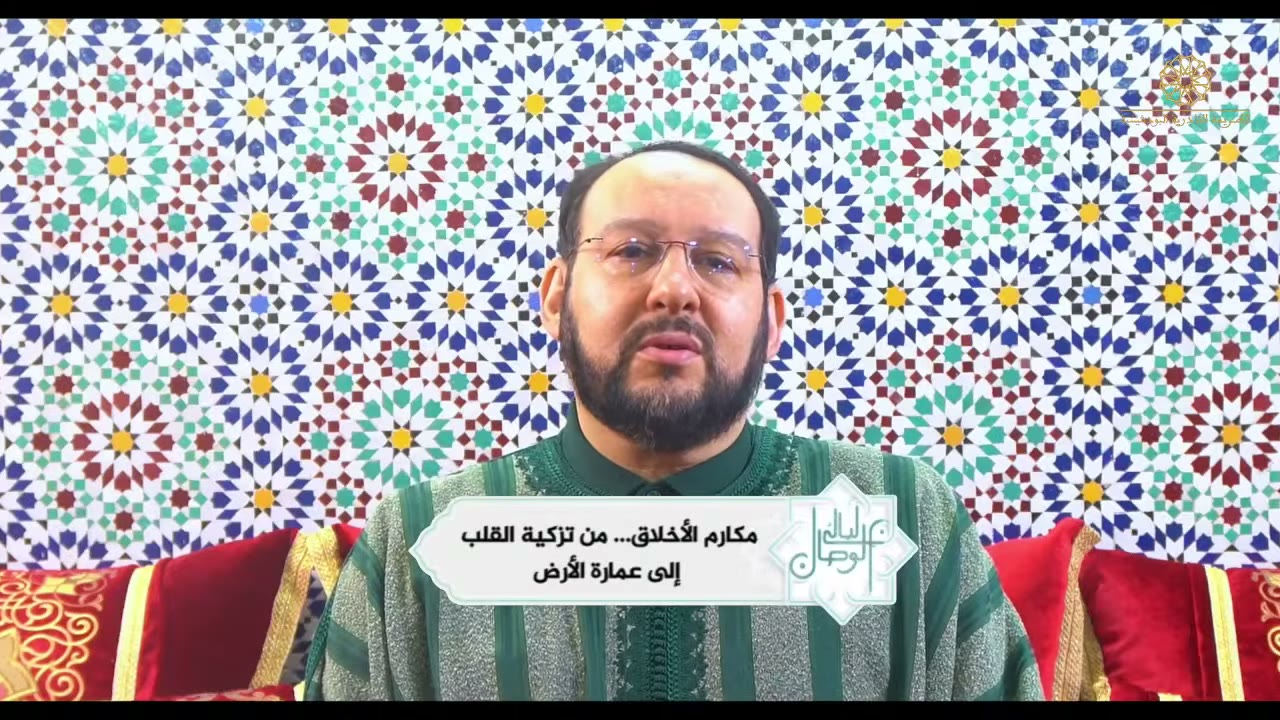
Teaching by Sidi Mounir al-Qadiri Boutchich, shaykh of the path, taken from episode 327 of the series Layali al-Wissal (“Nights of Communion”), broadcast on 4 October 2026 on the Al Moultaqa Foundation’s channel. Delivered in French.
Extract of 9 min 18 s (01:20:14 → 01:29:32). Original full video: Layali al-Wissal, episode 327, Al Moultaqa Foundation’s channel.
A great deal of our worry comes from wanting to control what does not depend on us: results, circumstances, other people, the future. The diagnosis is simple, and the answer fits in a single phrase: trust God. That is the announced title of the intervention given in French by Sidi Mounir al-Qadiri Boutchich, shaykh of the Tariqa Qadiriya Boutchichiya, delivered on 4 October 2026 at Layali al-Wissal no. 327, the Al Moultaqa Foundation’s gathering, in echo of the teaching in Arabic he had just given in the same programme.
Trust put to the test of facts
The teaching does not begin with a definition but with a story, the one the path has just lived through. After the death of Sidi Jamal al-Din, his father and master, circumstances grew difficult: the sincerity of the spiritual bond, the firmness of hearts and the faithfulness of the disciples to their master’s recommendations were put to the test, as counter-truths, accusations and falsehoods spread.
Some people, he notes, forgot two things: the prophetic word that the Muslim is the one from whose tongue and hand other Muslims are safe (a hadith reported by al-Bukhari and Muslim), and the fact that true Sufism consists in taking on the noblest of characters and abandoning the basest. He also cites the hadith of the Ka’ba: the sanctity of the believer, his property, his blood, the good opinion owed to him, is greater in God’s sight than that of the House itself.
But the men and women of the path, in Morocco and abroad, held fast to the education they had received, faithful to the testament of Sidi al-Hajj al-Abbas, Sidi al-Hajj al-Hamza and Sidi Jamal. They placed their trust in God and refused to let the turmoil of circumstances reach their hearts. They made it a source of constancy, faithfulness and service: the path carried on its way in love, serenity and discretion, choosing action over words and fine conduct over controversy.
A door that closes opens another
The lesson the wayfarer draws from it: divine protection does not mean the absence of trials. It means that at the moment of the trial, the heart stays at peace and finds the strength to carry on. One door may close, but God opens another where it was least expected. The promise stands in sura at-Talaq (65:2-3): “whoever is mindful of God, He will grant him a way out and provide for him by ways he did not count on. And whoever places his trust in God, He is sufficient for him.”
Resting from the care of directing
Then comes the piece of wisdom the speech holds up like a key. Ibn ‘Ata’ Allah al-Iskandari writes in his Hikam: “Relieve yourself of the care of directing your affairs; what Another has taken charge of for you, do not take charge of yourself.” When this truth settles into the heart, a man stops living in permanent anxiety. He acts, but does not cling to results. He works, yet he does not carry the weight of the future alone.
The image of the birds
The Prophet, peace and blessings be upon him, summed up trust in a single image, reported by at-Tirmidhi (2344): “Were you to rely on God as you should, He would provide for you as He provides for the birds: they set out in the morning on an empty belly and return in the evening well fed.” Sidi Mounir draws the precise moral: the bird does not stay in the nest. It goes out, it seeks, then it receives. We must give the best of ourselves, then entrust the result to God.
Full deeds, a free heart
The deep meaning of trust comes down to one sentence, worth unfolding: act fully without seeking to control everything, take the means without subjecting your heart to them, work responsibly then leave the outcome to God. Once this trust takes root, a man does not stop acting; he simply stops carrying the weight of the result alone. He prepares the future without sacrificing the peace of the present, goes through trials without losing hope, moves forward in the certainty that God weighs hearts, guides steps and accepts works.
True spirituality, the discourse insists, does not separate the relationship with God from responsibility towards people: it can only lead to more humility, more closeness to God, more beneficence and more usefulness to society. And each person is called to the role: “you are all ambassadors of these spiritual, universal and human values, of this science which is Sufism, the station of excellence in Islam.”
The intervention closes, as is customary, with invocations: that God fill hearts with trust in Him in ease as in trial, preserve the homeland, assist His Majesty King Mohammed VI and reward him for what he accomplishes for Morocco, and spread peace on earth, “in living together, in love and in respect for one another.”
The Arabic version of the same teaching, more developed, is the subject of the article The tranquillity of the heart: the hadith of Ibn ’Abbas, the examples of Abraham and Moses, and the application to the nation’s undertakings are detailed there.
Teaching by Sidi Mounir al-Qadiri Boutchich in Layali al-Wissal no. 327 (Al Moultaqa Foundation), intervention in French bounded from 01:20:14 to 01:29:32. Article written from the transcript; quotations reported faithfully in meaning, references verified in the working file.
Frequently asked questions
How can one concretely trust God?
According to Sidi Mounir's teaching: act fully without seeking to control everything, take the means without subjecting your heart to them, work responsibly then hand the matter over to God. The hadith of the birds gives the picture: they set out in the morning on an empty belly and return in the evening well fed.
Where does our anxiety come from, according to this teaching?
From the wish to control what does not depend on us: results, circumstances, other people, the future. Ibn 'Ata' Allah al-Iskandari writes in the Hikam: 'Relieve yourself of the care of directing your affairs; what Another has taken charge of for you, do not take charge of yourself.'
Which verse promises a way out to whoever relies on God?
The sura at-Talaq (65:2-3): 'whoever is mindful of God, He will grant him a way out and provide for him whence he does not expect. And whoever places his trust in God, God is enough for him.'
Does tawakkul exempt us from acting?
No. The bird does not stay in the nest: it goes out, it seeks, then it receives. Giving one's best and then entrusting the result to God: that is the formula of the teaching.