"Initiation au soufisme" by Éric Geoffroy: a review
Contents
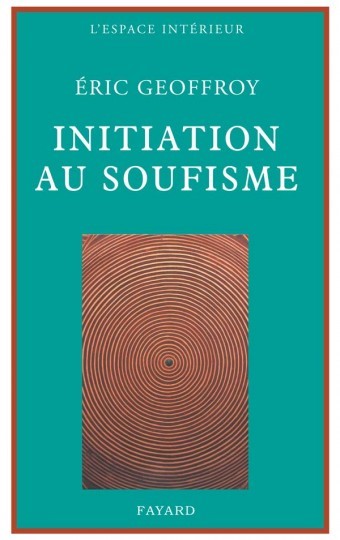
Initiation au soufisme, by Éric Geoffroy (Fayard, 2003), is one of the reference works in French for understanding what the initiatic path of Islam is. A review.

An author at the crossroads of practice and academia
Éric Geoffroy is one of the few authors writing on Sufism in France today. He speaks both as a practitioner of the Sufi path and as an academic scholar of Islam. One of his first books, L’Instant soufi (Actes Sud, 2000), gave an account of Sufism as inner experience, as one might describe a taste. With Initiation au soufisme, in 2003, he began a series of works intended to describe and explain the initiatic path of Islam, followed notably by Soufisme, voie intérieure de l’islam (Points, 2009) and Soufisme, histoire, fondements et pratiques de l’islam spirituel (Eyrolles, 2019).
A handbook for those who are asking questions
Initiation au soufisme presents itself as a sort of handbook, written for those who are seeking. The author attempts to address all the questions that Sufism raises. His exposition is methodical, rigorous and broadly accessible: he manages to make the links between Sufism and Islam intelligible, to give an overview of the path’s spiritual practices and to situate it in historical and sociological terms.
Geoffroy sets out to show how deeply Sufism is rooted in Islam, from which it is inseparable. On this point he states clearly that “Sufism is nothing other than Islam, both inward and outward, spirit and letter”. The spiritual and interior dimension of this path makes it wholly foreign to the rigid, indeed aggressive, versions that exist within contemporary Islam and are all too often brought to the fore. An old Sufi adage says: “do not take the Jew or the Christian in aversion, but your ego”. That sums up the relationship to the other which prevails among the Sufis.
Esotericism and exotericism: difficult relations
The author touches on the sometimes tense relations between esotericism and exotericism within Islam. If the dealings between the doctors of the Law and the Sufi masters are not always idyllic, the ‘ulama’ were very often affiliated to Sufi paths, and the Sufi masters were likewise recognised scholars in the Islamic sciences. It is only fairly recently, in the wake of the Wahhabi movement born in the eighteenth century, that Sufism began to be violently stigmatised. If criticisms punctuated its whole history, the attempts at marginalisation developed chiefly from the twentieth century onwards.
The history and typology of the forms of Sufism offered by the author demonstrate the richness of this tradition, which adapts itself to the conditions of each epoch. Far from being closed, as certain Islamic authorities recurrently suggest and have done for centuries, the Sufi path is very much alive and still welcomes seekers after spiritual realisation today. But times have changed, Geoffroy points out: the era of asceticism and purification by trial is over. Today, the master brings the path within the disciple’s reach and takes care not to drive him away with ordeals.
Books that open the door, without crossing the threshold
Lastly, this work contains a rich bibliography that will satisfy the mind eager for manuals or for the treatises of masters. Which should not make us forget that books offer only a glimpse of a reality that can only be apprehended by tasting it. A contemporary Sufi master reminds us: “true knowledge, useful knowledge, is not learnt from books; it comes from within, through the heart.” Useful knowledge is the fruit of practice and of travelling upon the path.
Further reading
- Questions and answers on Sufism
- The spiritual guide on the Sufi path
- Discover dhikr sessions in France