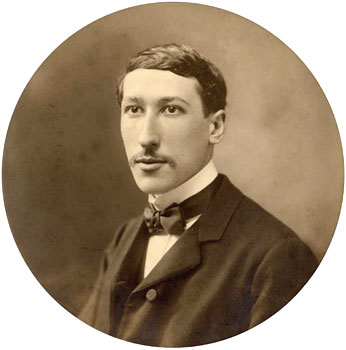
Sufism and the third millennium, by Larbi Rahim
Address by Dr Larbi Rahim at the seminar “Sufism and the third millennium” organised in Casablanca by the Tariqa Qadiriya Boutchichiya; text published in Le Matin du Sahara et du Maghreb and reproduced from the tariqa.fr press review.
At the seminar organised by “La Tariqa Kadiriya Boutchichiya” recently in Casablanca on “Sufism and the third millennium”, Dr Larbi Rahim dealt with “Sufism and modernism”.
“Here we are, he said, on the eve of a new century, but also on the eve of a new millennium, which we approach with a certain apprehension but also with hope!
The century that has passed has bequeathed to us an immense scientific and technological heritage, and a considerable volume of knowledge, but also a veritable arsenal of destruction and perdition on a barely imaginable scale.
Our era strangely recalls to us that Qur’anic sentence:
‘By these times! Man is in perdition, save those who have faith, who have done useful works, and who enjoin truth upon one another and enjoin perseverance upon one another.’
What then are this faith, these useful works, this truth and this perseverance alluded to in these verses, capable of saving humanity?
The extreme technical development attained by the civilised world can only survive if it integrates itself into a macrocosm of spirituality. If Sufism has always been the major expression of spirituality in the Muslim world, one may today ask oneself the following questions:
-
What can Sufism’s contribution be to the modern world? Can it help the man of the twenty-first century to live his modernity harmoniously?
-
Is there a modernity in Sufism? A renewal capable of adapting Sufism to the present structures of our society?
To be able to answer the first question, let us first try to sketch the profile of the man of the third millennium and to listen to his true aspirations.
The present gigantic technological wave has broken everywhere over the world, overflowing into the most remote corners of our planet.
This globalisation, or rather this universalisation, pushes us irremediably towards a progressive, sometimes even brutal homogenisation of our daily life and of the framework of our existence.
We are witnessing a standardisation of our dwellings, our streets and our cities, a standardisation of our clothing and our nutrition.
The human race is being reduced to a single model with a quasi-identical morphotype, whatever its origins and its living environment.
We are fatally drifting towards denaturation, towards the erasure of the great civilisations and the elaboration of a uniform society, devoid of all character.
This ambient monotony insinuates itself insidiously into the very interiority of the human being. He finds himself amputated of a fundamental right: the right to landmarks. He needs to have an identity, to see an intimate face again, to recover his true face!
He seeks a mirror of truth that he finds nowhere around him.
Because in reality this mirror of truth lies in the deepest part of man, limpid and luminous, but hidden by innumerable veils: the veil of our multiplied needs, the veil of our over-excited desires, the veil of every sort of information that harasses our brains each day.
Whereas our most ardent aspiration is that inner peace, that serenity, so that the Ocean of our being may calm down and we may see clearly into it, so as to perceive a beginning of truth towards which our spirit and our soul tend.
But we are far too proud! For the modern men that we are, states of soul are considered weaknesses, in a world where one must above all always appear strong and unfeeling.
We dress our personality in a veritable carapace that isolates us, but that also weighs upon us!
Yet it would take so little for us to be able to flourish; it would suffice for us sincerely to admit our weakness as human beings, to listen within us to that tenuous voice calling us! Then we would find ourselves as if by enchantment at the entrance to the way: the way of salvation. The way of truth, the spiritual way!
But how can one be sure that Sufism is indeed the way of salvation?
Well, first by looking at what it has been able to represent throughout the history of islam, and then by observing how it is lived in the contemporary world. On the historical plane, what have been the most published, most consulted works, still in force today, if not the writings bequeathed by the great Sufi masters?
Who are those men who codified the different modes of reading the Qur’an, who established the Madhahib in islam, who collected the Prophet’s hadiths, if not the Imams and the Sufi Shuyukh?
In our own day, finally, to understand what a Sufi master really is, one must seek out who has been able to continue in this way of authenticity, who works all his life to teach us to keep only what is best in ourselves, and who is himself kneaded from the noblest qualities.
Sometimes it is enough to meet him, or to cross his gaze…
When the Prophet was asked who the Awliya’ are, he answered:
They are those who make us evoke Allah as soon as we catch sight of them…
Finally, one can judge a Shaykh by his action… by listening to the testimony of all those around him, and thus truly evaluating all his spiritual power.
But the best way of realising it and being entirely convinced is to try it! One must attempt the experience!
In our present society, geared towards consumption, modern man has adopted a principle that has become sacred: to believe only in two things, what he has experienced and what he has tasted and consumed.
Now Sufism is precisely a practice, an experience lived on the individual scale, in the greatest intimacy of our being… But also an experience that procures a flavour! It is this flavour that inclines us to commit ourselves and to go further along the way.
This enlightened wayfaring, if one invests oneself in it sincerely, can open horizons of extraordinary richness for us… in the domain of knowledge as in that of well-being, in every compartment of our individuality.
And one becomes more and more conscious that this wayfaring is being accomplished towards the divine principle!
A supreme delight! The ultimate destiny to which every adept of Sufism aspires through his annihilation, at the summit of his invocations!
‘The angels descend towards those who say: Allah is our Lord, and those who attain rectitude. Have no fear and no sadness. And rejoice in the paradise that has been promised to you. We are your allies in the life of this world and in the hereafter.’
This miraculous transformation of human nature induced by Sufism can operate even if at the outset the disciple had a reduced, or seemingly non-existent, religious dimension. Provided the thirst of our soul is sufficiently expressed, and our listening sufficiently attentive.
Provided, too, that the fluid is sufficiently energising and abundant to be able to re-permeabilise these hearts desiccated by the extreme materiality of modern times.
‘Then, after that, your hearts hardened, they became like stone, or harder still. For from certain stones rivers can gush forth, certain stones split open to let water out. There are some that believe for fear of Allah, and God is not unaware of what you do.’
This is how, in our days, thanks to Sufism, men have been able to taste the fruits of spirituality, then those of a nascent faith, a faith that, skilfully irrigated by dhikr, grows strong and cultivates in us unsuspected virtues.
The disciple progressively detaches himself, as if by repulsion, from what is proscribed and conforms with attraction and delight to all that is prescribed.
The disciple will then evolve like a chrysalis which, in its cocoon, transforms into a butterfly and will soon be able to hatch and fly towards the light. For the disciple, it will be the light of islam!
‘Is the one who was inert and to whom We gave life, to whom We conferred a light with which to evolve among men, similar to the one who is in darkness from which he cannot extricate himself?’
This spontaneous evolution of a formerly hermetic spirit towards piety and worship, by way of Sufism, is the best proof of its authenticity, and of the role it can play in modern times.
But one may perhaps retort that in the present world there are not only the erring, not only elements living outside all religious context. Entire swathes of modern populations live simultaneously in technological modernity and in the intimacy of a religious life whose every norm they scrupulously observe.
Can it then be affirmed that they have hardly any need of Sufism, since they conscientiously discharge all their religious duties?
For the accomplishment of the precepts only constitutes the basis of the system of worship! The minimum required to lay claim to belonging to the Islamic Umma. Is it not said in the Qur’an: ‘Prayer turns one away from turpitude and from what is blameworthy, but the invocation of God is greater’?
And as is stipulated in the famous prophetic hadith of Jibril, worship is graded over three levels: ‘Maqam al-Islam’, ‘Maqam al-Iman’ and ‘Maqam al-Ihsan’. In other words:
-
A first level corresponding to conformity to the dogmas of islam
-
The second level is that of authenticated faith, that intimate and deep conviction whose intensity one feels varying according to the days and the circumstances. It is this flame that must always be fed and strengthened,
-
The third level is that of the accomplishment of Man, that of the growing perfectibility of his being and the excellence of his works.
The practice of Sufism, by fanning the flame of faith through dhikr, allows believers to deepen the accomplishment of their rituals and to confer upon them a dimension of interiority… Sufism joins substance and form together!
Religious practice is then no longer reduced to a mere duty but becomes a succession of lived benefits, a plenitude!
During his rituals, the believer finds himself in the serenity of a particular aura that irradiates him and warms his heart. He perceives ever more intimately the greatness and glory of his Lord, whose proximity he feels.
In the favour of these paroxysmal instants, at the moment when faith becomes sparkling, the three spiritual levels (‘al-Islam’, ‘al-Iman’ and ‘al-Ihsan’) combine and interpenetrate to tend and melt towards a single goal! An ideal of unicity! Unicity with the Creator and with His creation! Just as the shadow rejoins its light! Or perhaps even like a light through The Light.
It is this islam, with its powerful and intoxicating fluid, that the Prophet diffused around him, rapidly winning the adhesion of the brotherly and rebellious populations of his time.
It is this same fluid, this same ‘Madad’, that is conveyed from generation to generation through the Prophet’s companions, then through the Awliya’, down to our days, conferring upon islam all its vitality.
It is this islam that, in the centuries and millennia to come, will allow Man to remain in harmony with himself and with his universe.
Modern man, who has been kneaded in this dynamic and enlightened islam, like one initiated by Sufism, can therefore remain fully active in the created world and at the same time continually renew himself and orient himself towards his Creator.
We can now answer the second question we asked at the outset: does Sufism contain a parameter of modernity? Does it evolve with time, or does it remain an immutable ancestral discipline imposing a way of life with strict and constant rules?
But first of all, what image can one have today of Sufism through all the means of information surrounding us? How is it conceived by the mind of modern man?
Some regard Sufism as a philosophy or a form of culture that marked the first centuries of islam. Others regard it as legendary epics to which those beautiful and ancient lyric poems bear witness, or those kinds of dances that have become somewhat folkloric. In any case, most often one is almost certain that it is a current that no longer exists or should no longer exist, though its famous names are respected, such as al-Junayd, Jalaluddin Rumi or Ibn ’Arabi.
Sometimes Sufis can be imagined as marginal figures who abandon goods and families to go and live an ascetic life in isolation atop a mountain, or wandering through deserts. Yet Tasawwuf is still there! Very much alive, conferring upon islam its entire spiritual dimension.
It evolves and modernises constantly, bringing remedies specific to each epoch.
‘The Sufi is the son of his time.’ In other words, ‘the Sufi lives in contemporaneity.’
Tasawwuf is the only element capable of bringing to religion parameters of variability able to adapt it to every epoch.
Certainly Sufism did have its time of obligatory spiritual retreats.
Al-Ghazali, learned doctor and dignitary though he was, spent more than ten years in spiritual retreat.
That was the time when Sufis withdrew entirely from their milieu to live in the most elementary conditions, sometimes even in the most complete destitution. Such was the case of Rabi’a al-’Adawiyya, whom we all know, who had reduced her life to its simplest expression so as to be able to devote herself entirely to devotion.
What is more, the ancient Sufi paths based their teaching on rules of great rigour and sometimes imposed very harsh ordeals on the disciples to test their perseverance and their humility.
Thus it was that the great names of Sufism were constrained by their master, at the very beginning of their initiation, to go and beg alms at the entrance of the markets by way of an ordeal.
But nowadays, in this world of speed and haste, man in his errancy is so impatient, so demanding! So God in His infinite mercy has made the conditions of this spiritual teaching extremely easy.
There is no longer any need to search desperately for a guide, to run after the way; it is the way that comes to our very doors. Provided one can recognise it!
It is the Tariqa Qadiriya Boutchichiya that inaugurated this era of the simplicity of Sufism: first of all with Shaykh Hajj ’Abbas, and then with Sidi Hamza our present guide.
We have passed from a Tasawwuf based on rigour to a Tasawwuf based on gentleness and subtlety.
This is in no way an approximate or second-rate Sufism, but quite simply a change of methodology inspired by the Almighty to His Awliya’, to initiate an even greater Tasawwuf! For it operates in exceptionally dark human conditions.
Today the ‘Murid’ can henceforth have a normal family life, a normal professional activity; he enjoys his life and his goods normally, while obviously remaining within the limits of legality established by the Sharia.
It is the principle of relativity, however, that plays an essential role in this new type of Sufi teaching. A readjustment of our general scale of values.
Relationships, material goods, professional careers lose their primordial signification, their hypertrophied share among our priorities. They are no longer sacralised. They are given a very relative place in relation to what now concerns us more than anything: our soul!
One can indeed be rich and yet very simple, full of humility, a ‘faqir’ in one’s heart, just as one can be materially limited yet domineering, entirely galvanised by money.
One can live in a desert and have a completely scattered mind, be subject to the most Machiavellian dreams and phantasms, just as one can live in the multitude and in the anonymity of the crowd while remaining in detachment and serenity of spirit.
And the greatest merit (if one can attribute any merit at all to a Sufi) is precisely to be able to face the everyday and all its material vicissitudes while remaining within a holy and sound individual system, well sheltered in that invisible bubble that is spirituality. Hajj ’Abbas used to say: ‘The Murid’s spiritual retreat is to be found in his heart!’
In earlier centuries, too, access to the Sufi path was extremely selective; for years disciples painfully travelled the world in the hope of meeting a spiritual master, sometimes in vain. Shadhili had gone as far as Egypt before an enlightened spirit told him that the Shaykh he was seeking was in his native country, in Morocco, where he had left him. This was, in that instance, Moulay Abd al-Salam ibn Mashish, of whom he had been, what is more, the sole disciple.
Sufi teaching, too, was extremely precious; it could only be dispensed to accomplished believers with a very solid training in the Islamic sciences. They also had to be of a very high morality, doubled with an extreme humility. For at that time the Shaykh himself was constantly in search of a Murid worthy of the name, to whom he could transmit his teaching, and also, perhaps, his succession!
And when the disciple finally managed to find a guide, he could no longer leave him! His first duty was constantly to take care of the Shaykh’s person, down to the smallest detail of his daily life. At present, what also characterises our path is its profusion: its disciples are numbered in thousands, spread across every continent. Some knew nothing of Sufism and did not even suspect its existence.
They found themselves on the path by the happiest of chances: quite simply because they were in a sincere quest for truth. God then oriented them towards the path most suited for them to be able to discover it. What is more, nowadays the relation between the Shaykh and the Murid no longer involves any rigour, any particular protocol; one even sometimes has the impression that he spoils his disciples and coddles them. He knows that their ordeals are the very ones they endure in their daily lives, with all their constraints and temptations. And then the guide has the art of creating almost virtual situations which in fact constitute quasi-imperceptible ordeals, ordeals that take place in subtlety and yet have an incisive impact on the ego and on the Murid’s evolution.
The teaching itself is simple: it demands no prior condition and it is centred on invocation techniques that are easy to apply and constitute a veritable therapeutics for the soul.
One can therefore conclude by saying that Sufi teaching has evolved towards simplicity and modernity, that it is perfectly adapted to our epoch since it is open and tolerant. It is a practical teaching, an individual experimentation giving birth to a subtle and stimulating flavour, a veritable cure of well-being that frees us from all artificial attachment and transcends us. This beneficial transformation, operating on the individual as an element, can radiate by contiguity and gain his entourage, and then the different tissues of society.
‘God does not change a people unless its elements change in their interiority.’
But the ultimate goal lies elsewhere: it is the orientation towards the divine principle and the search for proximity to Allah Subhanah.’
Dr Larbi Rahim
Le Matin du Sahara et du Maghreb, Friday 31 December 1999, no. 10,571