Martin Lings, or the apology of the religion of the heart
Contents
‘The Sufi’s book is not made of ink and letters; it is nothing other than a heart white as snow.’ These few words of Jalal ad-Din Rumi could, if we understood them, replace all the reading in the world. ‘Say: Allah, then leave them to their vain discourse,’ says the Qur’an (VI, 91). Yet in our day, someone embarking on an inner search cannot content himself with such phrases, for his approach to things is above all mental, which prevents him from grasping the dimension of a lived reality.
Every spiritual way is a path leading from the finite to the Infinite, from the temporal to the Eternal, from the letter to the Spirit. And to bring us beyond ourselves, a way must first come and fetch us at the very place where we stand, and take us as we are. That is why the saints are said to wear the garments of their time, and so the teaching of the Sufis has been able to take highly diverse forms through the centuries, always in answer to the precise needs of those it addressed.
In former times, for instance, certain masters forbade their disciples to consult works dealing with spirituality, to remind them that Sufism is above all a flavour, which words can only evoke. But while it is true that reading can sometimes become a veil, it can also be a first step towards something else, a way for an individual to express his thirst; and when the time comes, it can become the setting of an intimate encounter between the traveller and the wave that will carry him off on its ebb to the infinite ocean…
It is doubtless the foreboding of such an encounter that draws so many Westerners towards books dealing with spirituality. Our civilisation, today heavily media-driven and open to every tradition in the world, has encouraged the spread of works approaching Sufism under different aspects. These works now serve as a bridge for Westerners curious to discover the wisdom of a tradition that until then was not in the least familiar to them.
A work nourished by experience
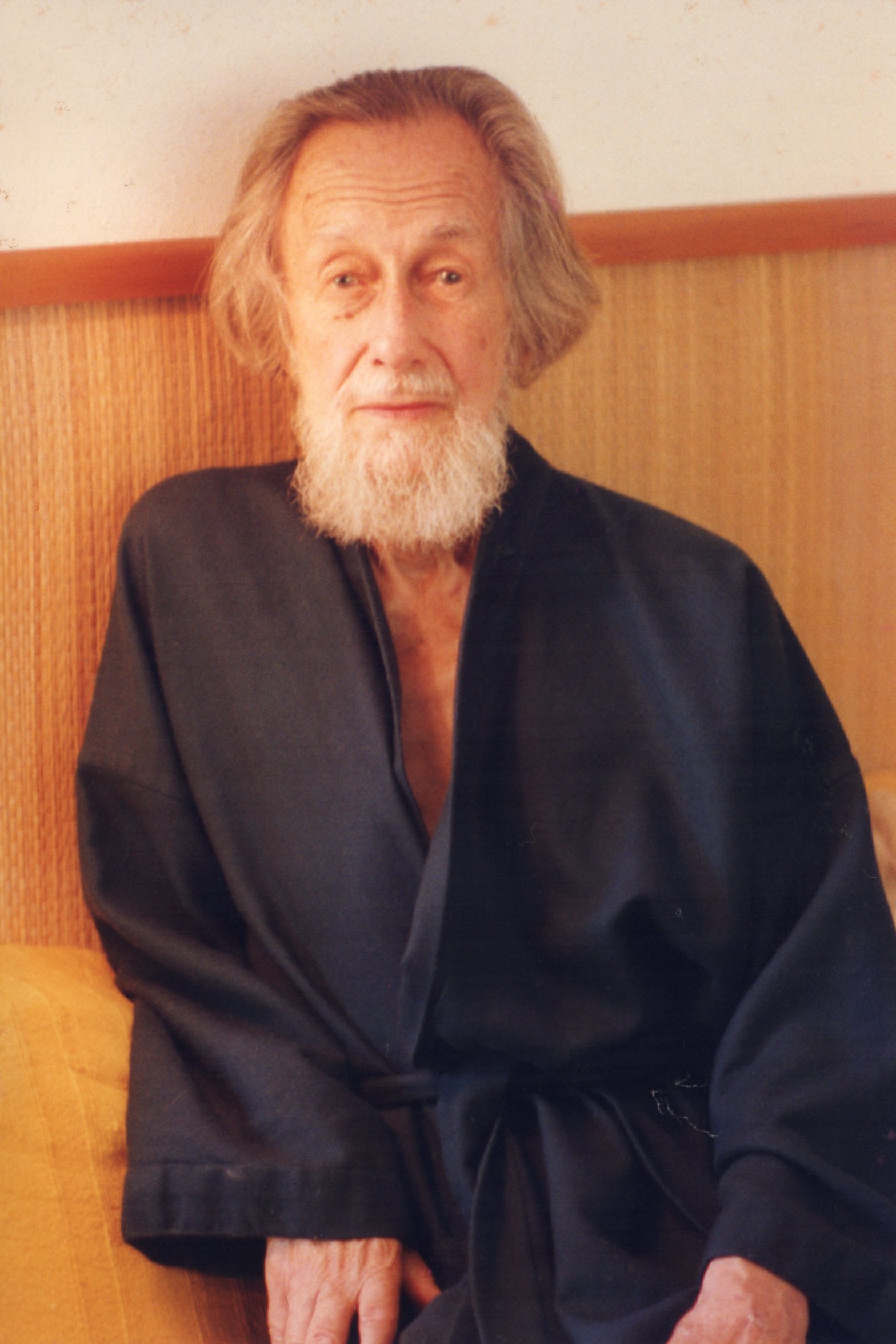
Most Europeans who have been able to discover Sufism through the written word have learnt a great deal from the work of Martin Lings. In him, historical exactitude, the wealth of the sources, the clarity and precision of the doctrinal explanations are nourished by an inner understanding of the way. Martin Lings always effaces himself behind the subject he treats; yet if he does not speak of his own experience, it is that experience which gives his writings their worth. One senses it at the turn of a word or an allusion, like the sudden overflowing of an intoxication that should have remained hidden. These two sentences gleaned from his work evoke what the way represents for him: ‘The spiritual way is an offering’; ‘Spiritual work is above all an accumulation of graces.’
Martin Lings writes in this movement of offering, with gratitude, and that is what enables him to let us taste certain very subtle aspects of Islamic spirituality.
The Prophet of islam used to say: ‘Act for this world as if you were to dwell in it a thousand years, and for the other as if you were to die tomorrow!’ This search for a twofold perfection, both outward and inward, demands a deep involvement in the world together with a total detachment. In the biography devoted to him, Martin Lings knows how to recount the intense experience the Prophet had of earthly life, while underscoring his indifference to the goods of this world.
We learn that Muhammad was successively a shepherd, a merchant, a hermit, an exile, a soldier, a legislator and finally a king. He was also an orphan, long the husband of a single wife, frequently the father of children who died in infancy, a widower, and finally the husband of several wives. But above all, at every instant of his life, in every gesture, he was the servant of God. When the tribe of Quraysh1, for instance, had offered him wealth and kingship if he agreed to renounce his message, and his uncle came in turn to implore him, he turned to him with tears in his eyes and answered: ‘I swear by God, even if they were to put the sun in my right hand and the moon in my left so that in return I abandon this cause, I would not abandon it before He had made it triumph or I had died for it.’
To illustrate this so characteristic aspect of the Muhammadan realisation, which perfectly integrates involvement in the world with awareness of the beyond, Martin Lings draws a parallel with the Qur’anic Revelation. The verb-made-book likewise comes to embrace every aspect of daily life, broaching subjects that seem to have nothing spiritual about them. The descriptions of Paradise evoke gardens, springs, marvellously beautiful women… Islam, as the last revelation of the cycle, is a return to the primordial religion, and it must teach man again to marvel before the supreme book: nature. ‘The seven heavens, the earth and all that is in them celebrate His praises. There is nothing that does not celebrate His praises. But you do not understand their praise’ (Qur’an XVII, 44).
The vision of the heart
It is because man has lost this faculty of wonder, because he perceives creation through his senses and his mind but no longer with his heart, that forms become a veil for him. Only the spiritual way can bring man to recover this vision of the heart. In a saying, God expresses Himself thus: ‘My servant does not cease to draw near to Me until I love him, and when I love him, I am the eye by which he sees…’ He who has reached that state then perceives the divine essence in all things. That is why, when the Quraysh demand miracles of the Prophet, the Qur’an answers them: ‘Do they not consider how the camels were created? And how the heavens were raised? And how the mountains were established? And how the earth was spread out?’ (Qur’an LXXXVIII, 17). Thus the most accomplished realisation does not consist in breaking free of the laws of nature to perform all manner of extraordinary prodigies, but on the contrary in perceiving the divine beauty and majesty that manifest themselves through those laws.
The Prophet also told his companions: ‘Abu Bakr did not outstrip you by more prayers or fasts, but by something that took place in the depths of his heart…’2 And in the end, it is to this dimension of the heart that Martin Lings opens us, for he seeks neither to please nor to convince, and trusts only in ‘the grace of the irresistible power of attraction of the truth’.
His work may thus question us, disturb us or even overturn us, so as to shake us ever a little more on the ground of our certainties. In fact, the questions he poses are more precious than the answers he gives, for from these questions a perplexity may be born, an awareness that there is here something that will never fit within the limits of our understanding, something that infinitely exceeds us…
This perplexity is an unavoidable passage in every quest for knowledge, for as Ibn ’Ajiba says: ‘The furthest from God are the learned through their learning and the devout through their devotion.’ Martin Lings’s work is not meant to be one more science about a philosophical current of the past; it opens a door for us onto an inner path. And that path can never disappear, for it is what gives human existence its whole meaning.
A few years ago, Shaykh al-’Alawi, a great twentieth-century Sufi saint to whom Martin Lings devoted a remarkable biography, wrote: ‘Friends, if you have understood the truth of my state, the way is there, before you. Follow in my footsteps, for by God, these are no doubtful things nor vague products of the imagination: I know with a knowledge at once secret and manifest, I have drunk the cup of love and taken possession of it; it has become my property for ever.’
Bibliography of Martin Lings
- Croyances anciennes et superstitions modernes, trans. Jean Plantin and Patrick Jauffneau, Paroles, 1988.
- Le Prophète Muhammad : sa vie d’après les sources les plus anciennes, trans. Jean-Louis Michon, Seuil, 1986.
- Un saint soufi du XXe siècle : le cheikh Ahmad al-Alawi, héritage et testament spirituel, Seuil, 1990.
- Le Secret de Shakespeare, Paroles, 1996.
By Raphaël Feur.

Martin Lings

Croyances anciennes et superstitions modernes
Further reading
- The life of the Prophet Muhammad (complete series)
- In the company of Shaykh ’Abd al-Wahid Yahya (René Guénon)
Footnotes
-
The Quraysh then constituted the most powerful tribe of Mecca and were long hostile to the message delivered by the Prophet. ↩
-
Abu Bakr was a companion of the Prophet from the earliest days and was nicknamed ‘the Truthful’, for his acts and words always proved to be of great rightness. On the Prophet’s death, he became the first caliph of the Muslim community. ↩