What is dhikr? An interview
Contents
Dhikr is the central practice of Sufism: the repetition, alone or in a group, of formulas and divine names drawn from the Qur’an. In this interview, Raphaël Feur explains what the word means, where the practice comes from, what its role is on the path and why it is transmitted through a guide.

What does the word “dhikr” mean?
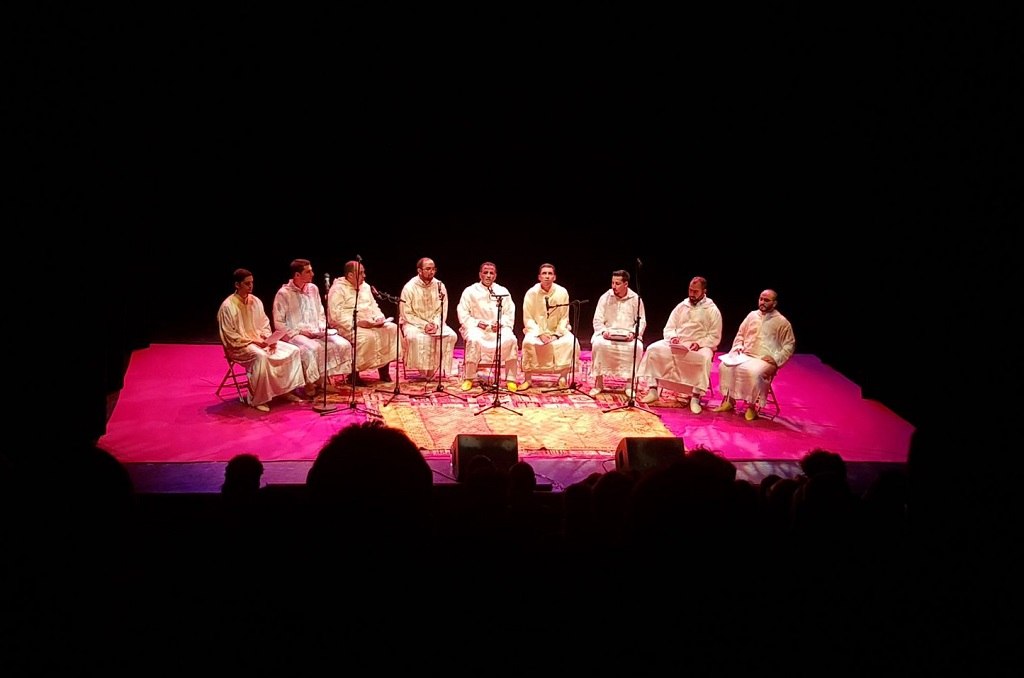
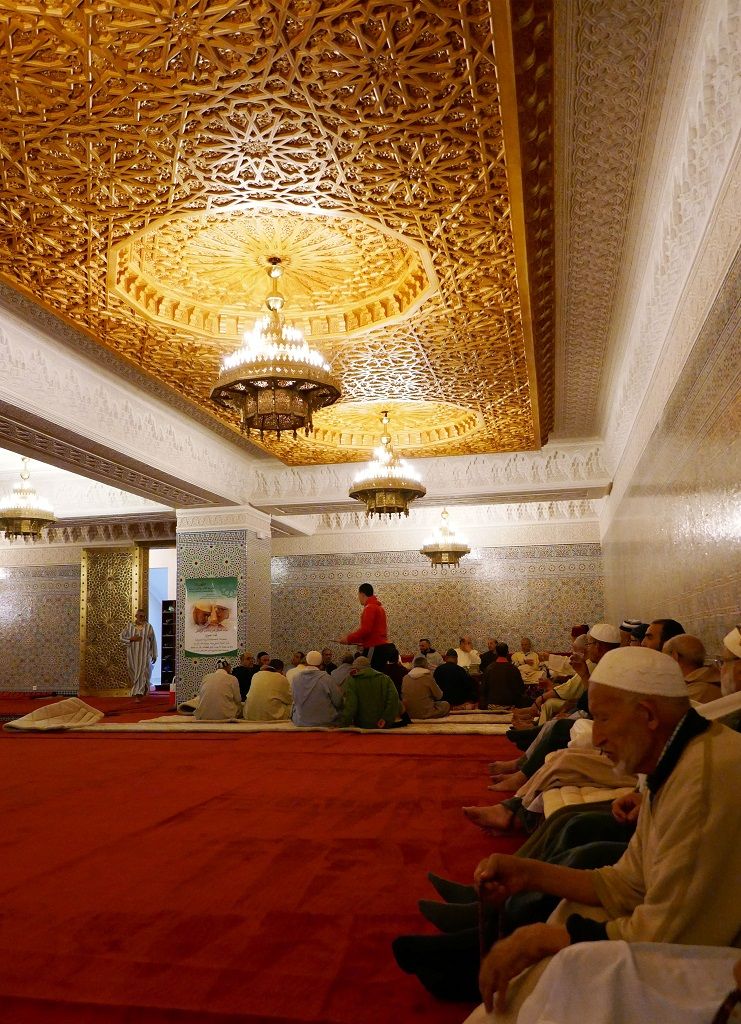
It means “remembrance”, but also “reminder” and “repetition”. In Sufism, the word designates the spiritual exercise consisting in repeating, a great many times, certain formulas drawn from the Qur’an. The sacred Book of the Muslims indeed urges man to remember his Lord frequently, and this is where the repetition of the divine names takes place. It can be done individually, in a low voice, or collectively, generally aloud.
Is this practice specific to Sufism, or does it belong to Islam as a whole?
It is a central practice in Sufism. Yet many non-Sufi Muslims also make invocations, notably after each ritual prayer, where it is traditional to recite “Subhanallah” (Glory to God) 33 times, then “Alhamdulillah” (Praise be to God) 33 times, and finally “Allahu akbar” (God is greatest) 33 times.
Is it a very old practice in Islam?
It goes back to the very sources of Islam. In the earliest days, the canonical prayer had not yet been revealed by God: during those first years, the Prophet Muhammad, may God’s peace and blessings be upon him, and his companions practised essentially dhikr, in particular the repetition of the name “Allah”.
What is the reference invocation in Sufism?
It is the first part of the profession of faith (shahada): “La ilaha illa Allah”, which can be translated as “there is no god but God”.
What is the function of dhikr?
The Prophet Muhammad, peace be upon him, said: “Everything has a means by which it can be purified, and for the heart, that means is dhikr.” To purify the heart is to combat every form of associationism; that is, to return to divine unicity. The Sufi can find in the repetition of “La ilaha illa Allah” the answers to all the questions he asks himself: everything is synthesised in this formula.
How can the repetition of a single phrase lead to a form of knowledge?
This kind of practice is often considered nowadays to belong to another era. Yet the form of knowledge dhikr brings is fundamental, for through it we learn to know our ego. As we try to bring our concentration back towards the presence of the Unique, we realise how much our mind tends to scatter. As we swim back up the current that carries us from one thing to another, we measure how powerful that force is, and how hard it is to struggle against this tendency of the soul: simply being there, listening to that Presence which penetrates us at every instant. “La ilaha illa Allah” can also be translated as: “Everything is relative save the divine Absolute.” The joys and sorrows we live through belong to the relative; what alone counts is finding the trace of the Absolute within that relative.
So we find ourselves at the heart of Muslim faith: divine unicity (tawhid)…
The Qur’an states: “Wherever you turn your gaze, there is the Face of God” (II, 115). Dhikr teaches us little by little to place our trust in God alone, and constantly to readjust our approach to events.
The participation of the body seems important. Is there a technique for controlling the breath?
Certain Sufi masters have been able to insist on particular techniques during dhikr sessions. But as the Qur’an says: “No gaze can encompass Him, but He encompasses every gaze” (VI, 103). No technique can lead to God in a systematic way; God in His infinity, on the other hand, can at any instant come and touch His creature out of an overflow of love. The practice therefore consists in turning our gaze towards Him and waiting patiently. The one who practises dhikr is like the peasant who ploughs his field: he has no power to make the rain fall, but his ploughing is indispensable. If rain falls on an unploughed field, it will not be as beneficial to the harvest as on a prepared one.
Can anyone practise dhikr?
When one practises dhikr, a form of inner “opening” takes place towards energies greater than ourselves. Nothing is more delicate than “opening oneself”: we do not know what we are exposing ourselves to, since it is a domain still unknown to us. That is why dhikr is inseparable from the notion of authorisation (idhn) for the recitation of the divine names. This authorisation can only come from a living spiritual master, himself authorised to transmit this type of practice.
So prior authorisation is inseparable from the practice of dhikr…
As soon as one commits to a spiritual journey, it is fundamental to attach oneself to an authentic guide. All this goes well beyond the merely technical aspect: it is the Sufi master’s authorisation, more than the recited formula itself, that brings about the transformation of the heart. A master used to tell his disciples that they did not have to worry about the content of their dhikr once it had been transmitted to them regularly within the brotherhood.
Further reading
- Invocation, dhikr and wird: the disciple’s daily practice
- The benefits of dhikr
- Attending a dhikr session: how it unfolds, cities, times; open to all, including Paris