Certainty, light of the heart: a lesson on yaqin
Contents
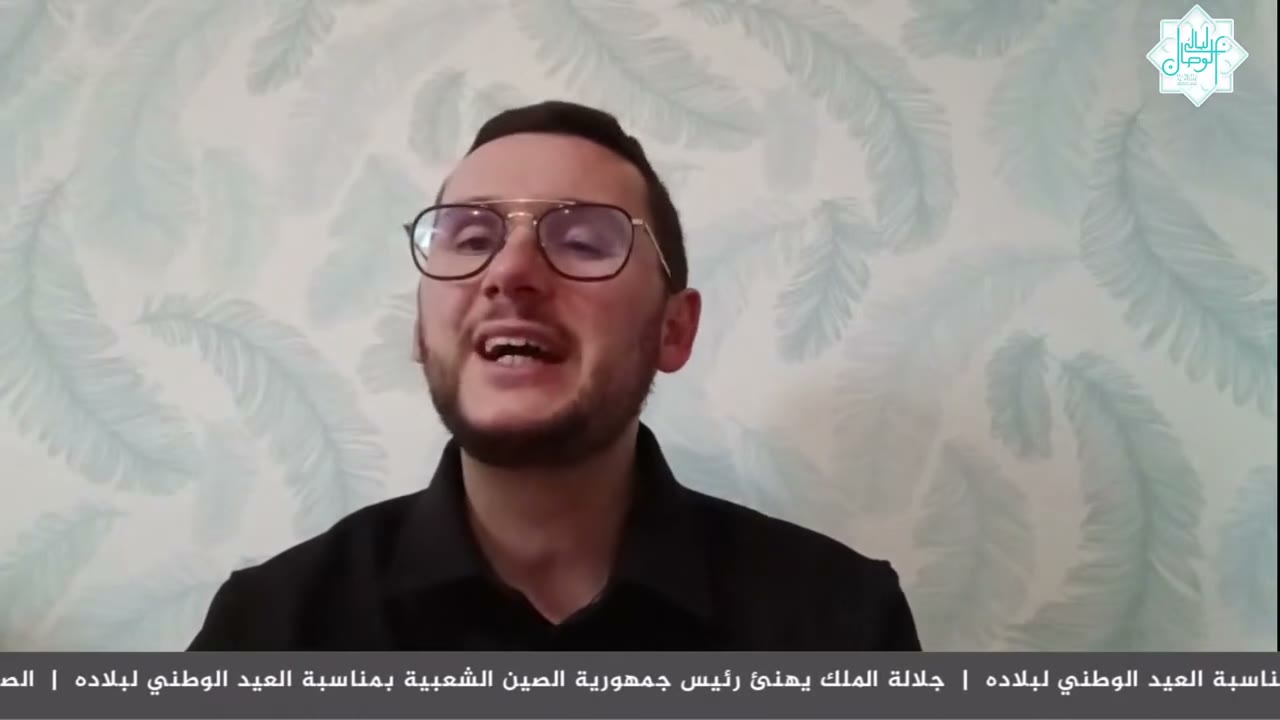
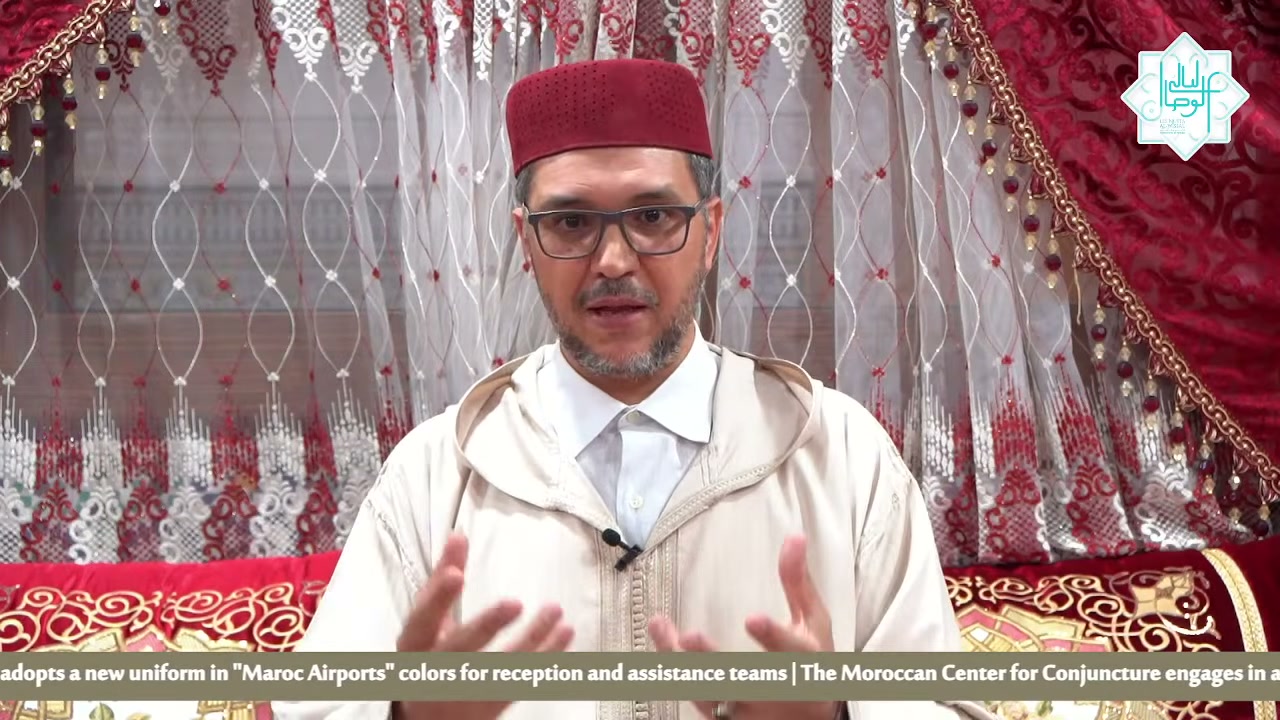
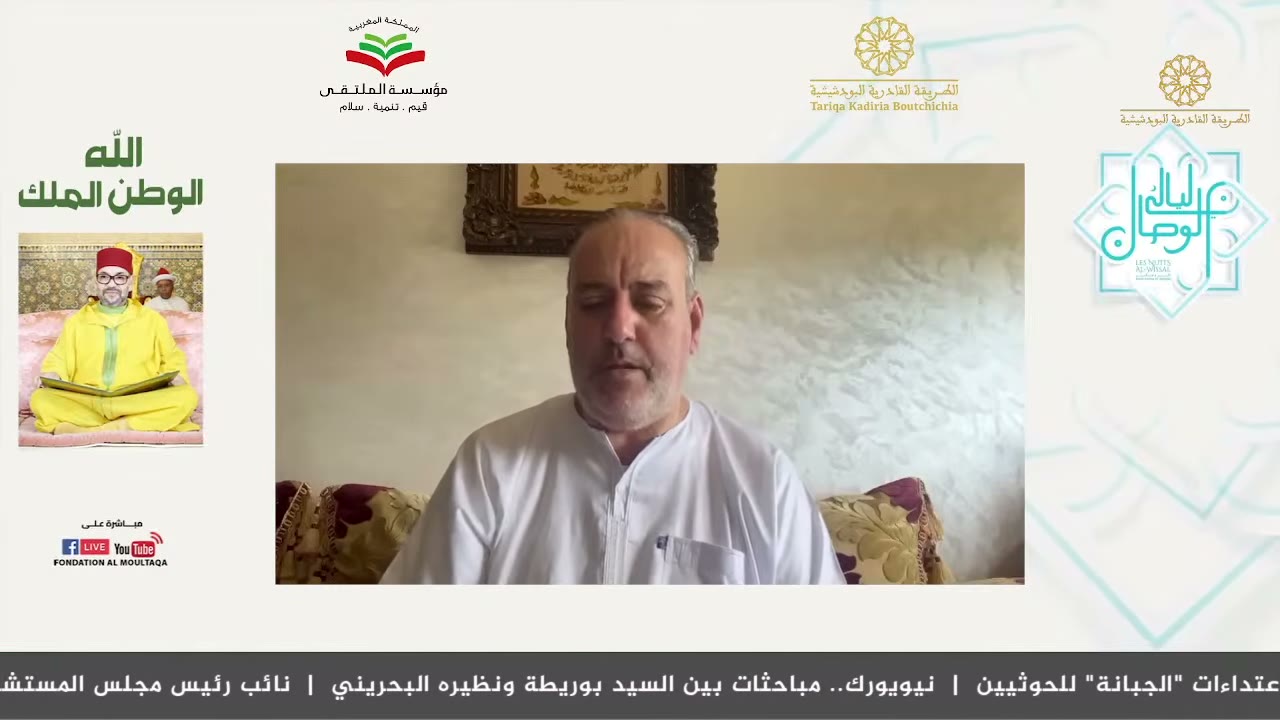
A lesson by Prof. Nour Eddine Ahya, taken from episode 327 of the series Layali al-Wissal (“Nights of Communion”), broadcast on 4 October 2026 on the Al Moultaqa Foundation’s channel. The sixth instalment of his series “A Reading of the Testament” (قراءة في الوصية), a commentary on the spiritual testament of Sidi Jamal al-Din al-Qadiri Boutchich. Delivered in Arabic; accompanying text and translation by the editorial team.
Extract of 10 min 27 s (00:19:00 → 00:29:27). Original full video: Layali al-Wissal, episode 327, Al Moultaqa Foundation’s channel.
Literal translation of the intervention (from the Arabic)
The intervention was delivered in Arabic; here is its literal translation into English, from beginning to end. The article below presents its meaning and structure; this text follows the discourse from the opening to the final salutation. The presenter’s introduction, which precedes the lesson, is summed up in a single sentence.
[The presenter introduces Prof. Nour Eddine Ahya, doctor in the sciences of belief and thought in the Muslim West: this is the sixth lesson of his series “A Reading of the Testament”, entitled “Certainty, light of the heart and constancy of the wayfarer towards God”.]
“May the most perfect peace and salutation be upon our master Muhammad, imam of the people of certainty and master of those who entrust themselves to God, the most deeply rooted of creatures in certainty and the straightest in religion, and upon his family and companions.
That said: our venerable shaykh, his excellency Dr Sidi and Moulay Mounir al-Qadiri Boutchich, may God preserve him; masters the learned, professors and worthy men; O people of communion: peace be upon you, and the mercy and blessings of God.
Our meeting today, my masters, extends the series of lessons in spiritual education we have entitled a reading of the testament of the knower of God, Sidi Jamal al-Din al-Qadiri Boutchich, may God sanctify his secret: that all-embracing testament which does not stop at the limits of words but opens to the heart the gates of meanings, and guides the wayfarer towards the truth of education, the sincerity of companionship, the light of following and the beauty of the journey to God.
In the previous lessons we paused over several meanings. We spoke of the unbroken chain of the authorised shaykh, Sidi and Moulay Mounir, may God preserve him, as a spiritual and educative bond linking hearts to the niche of prophecy. Then of the importance of the educating shaykh’s company on the path of God. Then of the education of hearts, so that the heart becomes fit to receive the divine meanings. Then we meditated on the love that moves the wayfarer towards God and makes him travel in the warmth of longing and the sincerity of impulse. We also paused over the station of ihsan, the station of presence and vigilance.
After these blessed meanings, my masters, we reach today an immense meaning, without which the journey cannot be set straight nor the heart hold on the path: certainty. For the chain needs certainty lest it remain a mere affiliation; companionship needs certainty; the education of hearts bears fruit only if certainty dwells in the heart; love is completed only if it is founded on certainty; and the station of ihsan takes root only in a certain heart, present with God.
That is where one grasps the depth of the testament’s formula, when Sidi Jamal al-Din, may God sanctify his secret, describes the companions, may God be pleased with them, as ‘lamps of guidance in the night of heedlessness and stakes of certainty in the sea of hesitation’: a formula that joins the light of guidance to the constancy of certainty. For a man may know the way, yet he needs a light to guide him; he may love the good, yet he needs a certainty to hold him; he may walk towards God, yet he needs a stake to keep him from drifting with the waves of hesitation.
Our lesson today, by God’s grace, will therefore be a halt with certainty: its meaning, its effect on the heart and on conduct, and how it becomes a light that scatters the darkness of doubt and a stake that steadies the servant when the waves of temptation shake him and trials multiply upon him. Certainty, my masters, is among the highest ranks of sincerity with God and with the servants. I ask God, glorified and exalted, to make us, you and me, among the people of certainty, and to let us taste its sweetness, its blessing and its intimacy.
Yes, how much we need today, my masters, how much we need certainty, in a time when violent winds of doubt sweep so many hearts. We recall these meanings so that those hearts return to the shade of certainty and its cool, delectable gardens, so that they recover the station God willed for them, and so that we taste once more the freshness and sweetness of certainty.
Certainty, in the language, derives from the word yaqana: it means the disappearance of doubt. Ibn Manzur, may God have mercy on him, says: certainty is knowledge together with the disappearance of doubt. One says: I knew the thing with certainty, that is, with a knowledge in which there is no doubt. And Ibn al-Qayyim, may God have mercy on him, says in his book Madarij as-Salikin: certainty is to faith what the spirit is to the body; by it the knowers are set apart, for it the competitors vie, towards it the workers roll up their sleeves. And when patience weds certainty, from the two of them is born access to the imamate in religion, in truth of the word of God, exalted: ‘And We made of them imams who guide by Our command, because they had been patient; and they believed with certainty in Our signs.’ And: ‘Among the believers are men who were true to what they had pledged to God.’
Certainty is among the noblest ranks of sincerity with God. It is the heart’s quietude and the stability of knowledge within it, as Junayd, may God have mercy on him, said: certainty is the stability of knowledge that does not turn back, does not change and does not fluctuate in the heart. And Dhu’n-Nun the Egyptian, may God have mercy on him, said: certainty is looking towards God in everything, returning to Him in every affair, seeking His help in every state.
For the people of guidance and the people of success are the people of certainty: ‘and who believe with certainty in the Hereafter: those are upon guidance from their Lord, and those are the ones who prosper.’ O God, make us of their number, O most Merciful of the merciful.
The Majestic, exalted be His majesty, mentioned the people of the fire (may God preserve us, me and you, from its heat and its evil) and showed that they were not people of certainty, in truth of His word: ‘And when it was said to them: God’s promise is true and there is no doubt about the Hour, you said: we do not know what the Hour is; we do no more than conjecture, and we are not convinced.’ Such is the condition of hypocrisy, and there is no strength nor power save in God, the Most High, the Immense. ‘Only those ask you for exemption who do not believe in God and the Last Day; their hearts are in doubt, and in their doubt they waver’, that is, they turn back and forth in their doubt. ’Abd Allah ibn Ubayy ibn Salul pronounced the two attestations before the messenger of God, peace and blessings be upon him, yet he is in the lowest degree of the fire (may God guard us from it): such are the people of hypocrisy. May God preserve us, and you, from hypocrisy.
The mark of the people of sincere faith is therefore certainty. He said, glorified: ‘The believers are only those who believe in God and His messenger, then do not doubt, and strive with their wealth and their persons in the way of God: those are the sincere.’
And the Prophet, peace and blessings be upon him, warned his community against the weakness of certainty: he said, in the sound hadith reported by at-Tabarani: ‘What I fear for my community is the weakness of certainty.’
Certainty has degrees. There is the knowledge of certainty (’ilm al-yaqin): the knowledge of truths, knowledges and lights with which God inspires the hearts of the elect among His saints. There is the eye of certainty (’ayn al-yaqin): sincerity in works, according to the word of Ibn ‘Ata’ Allah al-Iskandari, may God have mercy on him: ‘Works are bodies raised up; their spirits are the presence of the secret of sincerity within them.’ And there is the truth of certainty (haqq al-yaqin): contemplation.
Certainty, my masters, is acquired in the company of God’s saints, the accomplished knowers on the path, through their Muhammadian orientations built upon the Book and the Sunna. The Messenger, peace and blessings be upon him, commands us to learn certainty by his word: ‘Learn certainty as you have learned the Quran, for I too am learning.’ And the noble hadith brings the prophetic orientation towards renewing certainty. How to renew it? In the text of the testament of our shaykh Sidi Jamal al-Din, and of our beloved shaykh Sidi Mounir, appears the word of the Prophet, peace and blessings be upon him: ‘Cling to the jama’a and beware of division, for shaytan is with the lone one, and he is further from two.’
That is a very deep meaning in the subject of certainty: when a man remains alone with his suggestions, his certainty may weaken. But when he is within an upright community, when he hears the remembrance and sees the people of sincerity, the dhikr drives away heedlessness and strengthens presence with God. The more the servant mentions his Lord, the stronger his sense of nearness to Him grows; and sitting with those who remind one of God renews certainty. Whoever sits with people of constancy catches something of their constancy, and whoever sits with people of heedlessness catches something of their heedlessness: company shapes a large part of the heart’s state.
So whoever wants certainty, my masters, let him seek the company of God’s saints, the knowers who point to God, and let him sit with those who bring him closer to God, not with those who plant doubt in him and attachment to the lower world. The testament of the knower of God, Sidi Jamal al-Din, may God sanctify his secret, has shown us that the companions, may God be pleased with them, were lamps of guidance and stakes of certainty, because they had received the lights of education from our master the messenger of God, peace and blessings be upon him: they became models of constancy in the time of temptations and of sincerity in the time of hesitation. Such is the spiritual education attached by the chain to the messenger of God, peace and blessings be upon him.
I ask God, glorified and exalted, to grant us a sincere certainty, to strengthen our hearts upon the covenant with Him, Lord of the worlds, and to fortify us in obedience. O God, grant us a certainty that temptations cannot shake, a faith that trials cannot weaken, a heart present with You, a tongue that mentions You, and the company of Your saintly knowers. And our last call is that praise be to God, Lord of the worlds.”
A building in which every storey calls for certainty
The lesson is the sixth in a series that Prof. Nour Eddine Ahya, doctor in the sciences of belief and thought in the Muslim West, devotes to Sidi Jamal al-Din’s testament at the gatherings of the Tariqa Qadiriya Boutchichiya. He begins by linking the day’s instalment to the whole chain: the sanad, companionship (suhba), the education of hearts, love, ihsan. Not one of those storeys stands without yaqin: the chain would remain a nominal affiliation without certainty, companionship a gathering without force, love an impulse without a root. Certainty is therefore not one more subject on the syllabus: it is what keeps the previous subjects from collapsing.
The testament’s formula gives the lesson its motif: the companions are “lamps of guidance in the night of heedlessness and stakes of certainty in the sea of hesitation”. Two images for two needs: knowing the way calls for a light; holding to it calls for an anchor. The stake (watad) is the detail that changes everything: the wayfarer does not always lack direction; he lacks what it takes to resist the drift when the waves rise.
What certainty weighs in faith
The definitions follow one another in ascent. On the lexical side, Ibn Manzur (Lisan al-’Arab): certainty is knowledge with the disappearance of doubt. On the Sufi side, Junayd: the stability of knowledge in the heart, which neither turns back, changes nor fluctuates; Dhu’n-Nun the Egyptian: looking towards God in everything, returning to Him in every affair. Ibn al-Qayyim, in Madarij as-Salikin, gives the measure of the rank: yaqin is to faith what the spirit is to the body. Without it, faith is an inert body.
The Quran sorts out the states of the heart. On one side, “those who believe with certainty in the Hereafter” are “upon guidance from their Lord” and “those are the ones who prosper” (2:4-5); the sincere believers are those who “do not doubt” (49:15). On the other, the people of the fire “do no more than conjecture” before the Hour (45:32) and the hypocrites “waver in their doubt” (9:45): Ibn Ubayy, who had nonetheless pronounced the two attestations, is the example of the doubt that voids the work.
Three degrees, one method
The lesson takes up the classical gradation: ’ilm al-yaqin, the knowledge of truths and inspired lights; ’ayn al-yaqin, sincerity in works, with Ibn ‘Ata’ Allah’s hikma on the “bodies raised up” whose spirit is the secret of ikhlas; haqq al-yaqin, contemplation. And the method of acquiring it is as social as it is spiritual: certainty is caught in company. The hadith of the jama’a (at-Tirmidhi) gives the reason: shaytan is with the lone one and further from two. Alone with its suggestions, the heart weakens; surrounded by people of constancy and dhikr, it renews itself. “Company shapes a large part of the heart’s state.”
The lesson’s conclusion returns to the testament: the companions were lamps and stakes because they had received the prophetic education at the source. That is the path’s own programme, attached through its shaykh Sidi Mounir al-Qadiri Boutchich to that chain: to receive the lights of education so as to become, in one’s turn, a stake in the sea of hesitation.
Lesson by Prof. Nour Eddine Ahya in Layali al-Wissal no. 327 (Al Moultaqa Foundation), bounded from 00:19:00 to 00:29:27. Article written from the whisper transcript and the source’s automatic translation track; quotations reported faithfully in meaning, references verified in the working file.
Frequently asked questions
What is yaqin on the Sufi path?
Certainty (yaqin), in Junayd's definition reported in this lesson, is the stability of knowledge in the heart, which neither turns back, changes nor fluctuates. Ibn Manzur defines it as knowledge with the disappearance of doubt; Ibn al-Qayyim says it is to faith what the spirit is to the body.
What are the degrees of certainty?
Three degrees are described: 'ilm al-yaqin, the knowledge of truths and lights inspired in hearts; 'ayn al-yaqin, sincerity in works; haqq al-yaqin, contemplation (mushahada).
How can one renew one's certainty, according to this lesson?
Through company: cling to the jama'a, for 'shaytan is with the lone one and further from two', practise the dhikr that drives away heedlessness, and sit with those who remind you of God. 'Whoever sits with people of constancy catches something of their constancy.'
Which verse ties certainty to success?
Sura al-Baqara (2:4-5): 'and who believe with certainty in the Hereafter: those are upon guidance from their Lord, and those are the ones who prosper'.