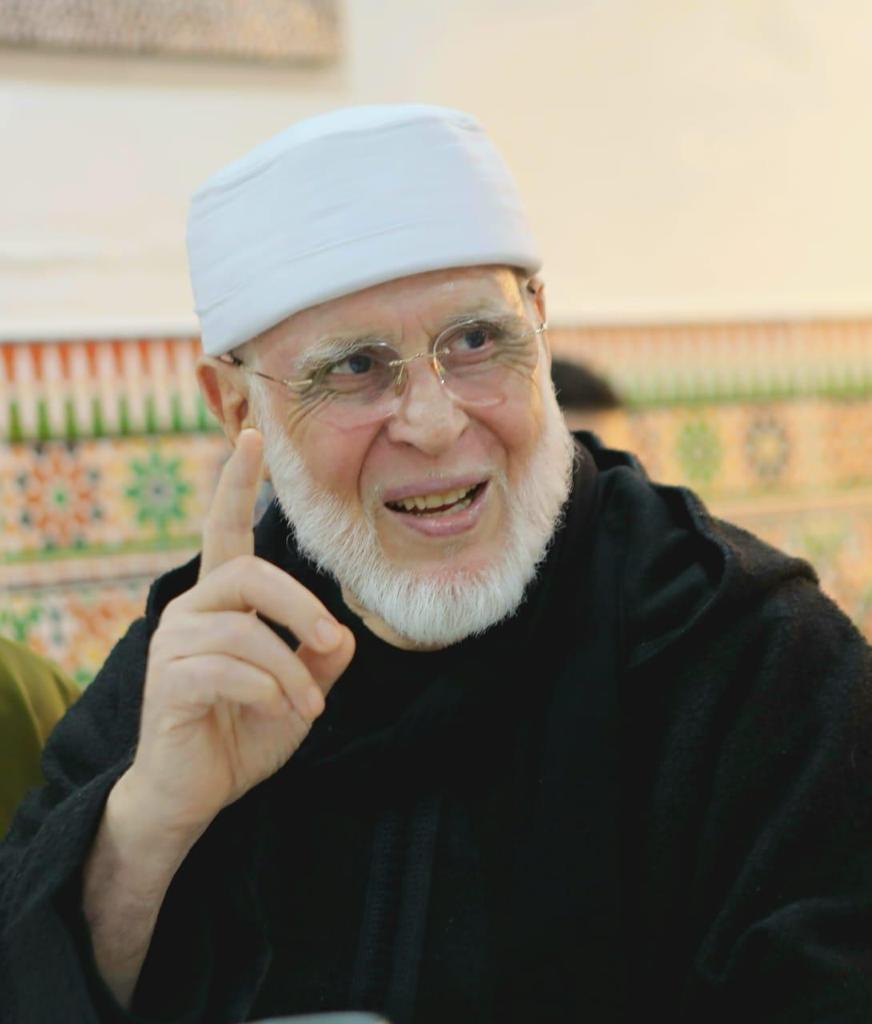
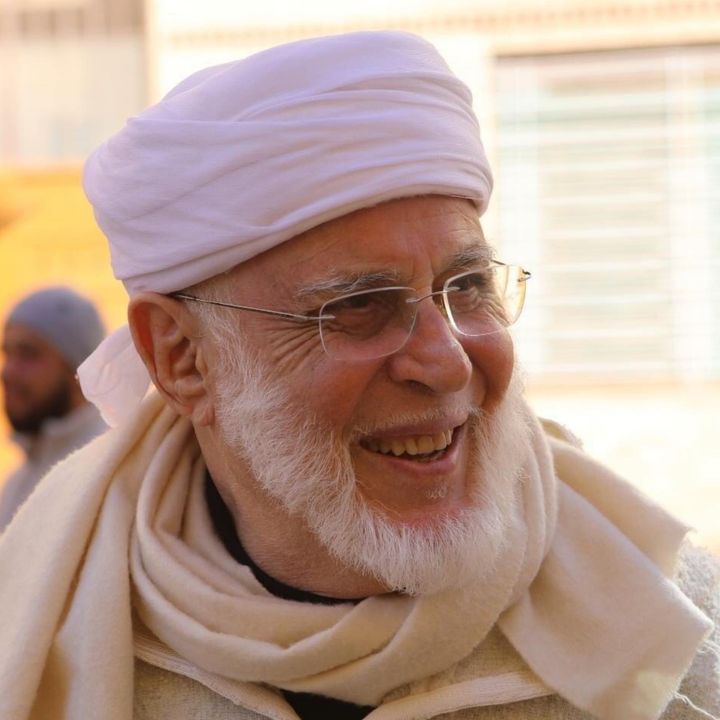
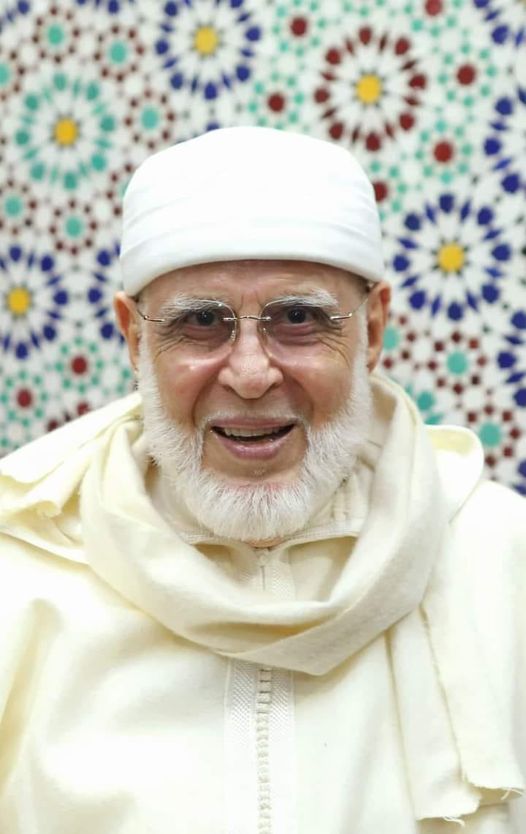
Extracts from Sidi Jamal's speech, mawlid 2024
Contents
In the name of God, the Clement, the Merciful.
May prayers and peace be upon our Prophet Muhammad, the chosen Prophet, of sublime and perfect attributes. The Prophet of the whole of creation, the noblest, the most honoured of beings. The perfect man, the essence of beauty and perfection, the guide towards God’s straight path. He who was sent as compassion and mercy for all creation. May he be blessed, together with his noble family and his beloved, pure and virtuous companions.
The celebration of the mawlid
Dear assembly of those who invoke God,
It is with joy that the Qadiriya Boutchichiya brotherhood celebrates the birthday of the best of creatures, our master Muhammad, the beloved, the bearer of good tidings, the warner, the shining lamp.
Dear brothers, dear sisters,
It is right for us, and for all Muslims, to celebrate the Prophet’s birthday, he who was raised during the Night Journey as far as the Lote Tree of the Utmost Boundary, so near that he was at two bows’ length or nearer [to the Presence], and to whom Almighty God revealed what He revealed.
May God’s peace and blessing be upon you, O best of creatures, beloved of the Merciful. You are worthy of all praise, for God loves you and loves those who carry you in their hearts.
Invocation, remedy of hearts
Dear assembly,
Having briefly evoked the celebration of our noble Prophet’s birth, this fundamental pillar, I recommend to you, as to myself, to invoke in abundance (dhikr), for the energy of light that results from it rises towards heaven. The excellent word therefore ascends to Him and, for the one who invokes, no opening is possible outside this practice.
It is an effective remedy against the illnesses of the heart; but dhikr is only beneficial when accompanied by an orientation towards the firm bond that unites the disciple’s heart to that of his shaykh.
The people of God teach that knowledge is acquired from ‘the mouth of men’. Among the conditions necessary for learning any science, then, is receiving it directly from masters, for no book alone allows it to be acquired in full.
Thus the shaykh is the sine qua non condition for the opening of the gates of the quest. And no book, no writing, could restore the essence of this quest, contained wholly in the teaching delivered directly, without intermediary, by the master himself.
So the first door of education is the very person of the teacher. In this sense it has been said: ‘He who enters knowledge alone comes out of it alone’, that is to say, he who enters knowledge without a shaykh comes out of it without knowledge. Learning a science is, after all, much like learning a trade, and every trade requires a master.
If one wishes to acquire this science, it is therefore indispensable to receive it from one who has absolute mastery of it. Plato said: ‘One can only learn from those one loves.’ In the science of Sufism, this means that one cannot learn from one’s shaykh, even an authorised one, if one feels no love for him. This method is constant among the people of God, who regard companionship as the heart of Sufi education.
Following on from orientation, authorised dhikr is the chief pillar of this education. Dhikr is akin to the polishing of the heart’s impurities. It is the authentic soap of hearts. Abu Darda’ (may God be pleased with him) said: ‘For everything there is a polishing, and the polishing of hearts is the invocation of God.’
Dhikr is the remedy for all the illnesses of the heart. Ka’b ibn Malik (may God be pleased with him) said: ‘The abundant practice of dhikr is a protection against hypocrisy.’ For effort in dhikr and its repetition cleanse the disciple’s heart of every fault and every sin (…)
I encourage and recommend to you, as to myself, to practise dhikr abundantly, to attend collective invocations, and to keep the zawiyas (places of practice) alive; for they are gardens among the gardens of paradise.
As it is stated in the hadith qudsi, God says: ‘I am the companion of the one who mentions Me.’
The Qur’an, the Sunna and the lawful
I recommend to you, as to myself, to hold fast to the Qur’an and the Sunna. The Qur’an is the word of God, and the Sunna is made up of the wisdoms, deeds, approvals and states of the Prophet (peace and blessings upon him), as our grandfather Sidi al-Hajj al-’Abbas (may God sanctify his secret) said: ‘Our path is this: what the Prophet brought you, take it, and what he forbade you, abstain from it.’
The meaning of these words is to follow the commandments and to keep absolutely away from the prohibitions, for God is Pure and accepts only what is pure. On this subject, according to Abu Hurayra, the Prophet (peace and blessings upon him) said: ‘Cleanse yourselves by every means at your disposal, for God built Islam upon cleanliness, and none shall enter paradise without being clean.’
O disciple, man or woman, live within the lawful and turn away from the unlawful without further delay. On this subject, let me tell you a story I heard from my father (Sidi Hamza, may God have mercy on his soul):
One day, my father was invited to the home of one of the notables of the region. As custom requires for welcoming guests, they offered them a roast sheep. The guests began to eat heartily, but each time my father started to eat, he saw worms moving on the sheep’s meat. He then changed his seat, but the phenomenon happened again. He understood, therefore, and stopped eating, whilst keeping this to himself without speaking of it to anyone. On leaving the host’s house, my father confided this secret to one of the guests close to him, and it turned out that the host drew his income from an impure source. This vision was a sign of grace. We ask God to preserve us all from anything unlawful.
Veneration
Dear assembly,
I recommend to you, as to myself, to practise reverence and respect on your journey towards God. It has been said: ‘He who reveres things draws benefit from them and will be great before God; but he who belittles them, they will draw from him and he will be small before God.’ Friendship with God follows from friendship with His Prophet, and friendship with the Prophet follows from friendship with the noble and great among His servants, who are the believers. He who does not revere the noble and the great will attain no degree of nearness to God and His Prophet.
On this subject, the Prophet (peace and blessings upon him) said: ‘Honouring an elderly Muslim is part of venerating the majesty of God.’ And in another hadith he said: ‘Honour the shuyukh, for honouring the shuyukh is part of the veneration of God.’ (…)
O Lord, accept our prayer, and bless all those who invoke, men and women, together with their children. Fulfil their aims and heal them, You who are the Healer of every illness.
O Lord, do not punish us if we have forgotten or sinned. O Lord, do not impose on us a burden like the one You imposed on those before us. O Lord, do not impose on us what we cannot bear. Forgive us, excuse us, and have mercy on us. You are our Protector, so grant us victory over the unbelieving people.
Glory to our Lord, the Lord of majesty, above what they describe. Peace be upon the messengers. Praise be to God, Lord of the worlds.