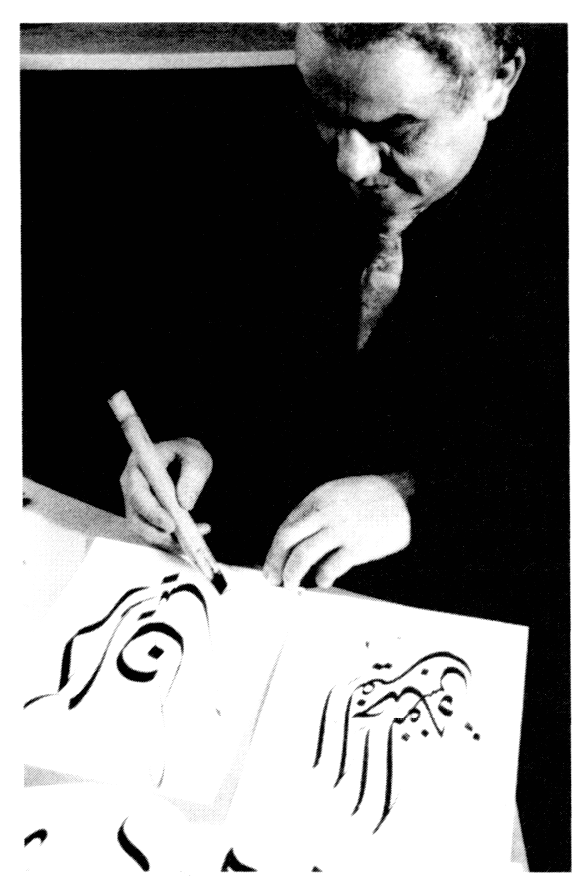
The Burda: Imam al-Busiri's qasida in praise of the Prophet
Contents
Taken from the work Al-Burda*, by Hassan Boutaleb, Albouraq editions.*
The Burda is a poem sung in praise of the Prophet (peace and blessings be upon him), still very often recited in the different Sufi brotherhoods. This work of Imam al-Busiri has crossed ages and continents. Commented on by the most diverse scholars and in all the languages of islam (Arabic, Persian, Turkish, Indian, Urdu and various dialects), it has also known translations into Chinese, Russian, German, English, French, Italian and Spanish: the interest it arouses has never waned. The beauty of this exceptional ode is quite simply overwhelming. Its composer managed to describe the most important stages of the Prophet’s life as well as his most significant miracles, in verses each more astounding than the last, in a concise and perfect style, resorting to the most subtle and refined Arabic there is, and conceding nothing to the sublime rhythm of the great composers of qasa’id through the ages.
The life of al-Busiri
Its author, Imam al-Busiri, was born in Upper Egypt in the year 608 of the Hegira (1211).
He received the traditional education of his time: memorisation of the Holy Qur’an, study of the prophetic tradition, and of the Arabic language and grammar.
He left his native village for Cairo, where he pursued his studies with prestigious scholars and became familiar with history, the biography of the Prophet, literature and the religious sciences. His leaning towards poetry and his natural ease in composing verse are also known, qualities acquired very early that earned him admission to the court of princes fond of eulogies and prose.
Practising the trade of calligrapher, then market inspector, he was one day touched by the fires of love for the Prophet. He was then seized by an ardent desire for the lord of men, an unbridled passion that set his whole being ablaze and led him to renounce profane prose: from then on, the imam of poets would dedicate his innate talent to the Prophet, and compose prodigious hymns for him.
The night of the Burda
Al-Busiri explains the reasons for this upheaval through a poignant testimony:
After paying a visit to a notable of the town, on my way back I met near my dwelling a sage of comely aspect and mature age, who addressed me thus: “Was it you who saw the Messenger of God this night in a dream?” I answered: “No, I did not see the Prophet this night.” The sage’s words moved me and filled my heart with love and ardent desire for the Prophet. I went home and to bed. I then saw in a dream the Messenger of God, in the presence of his companions. He was like the sun in the midst of the stars. I awoke with my heart throbbing, filled with love and joy. Love for that light never again left my heart, and I then set about composing hymns in praise of the Prophet, such as the Hamziyya and the Mudriyya. Later, I was struck by a terrible illness that paralysed half of my body and prevented me from moving. Then the idea came to me of composing a work treating the merits of the Prophet, through which I besought God to heal me. After composing it and falling asleep, lo, the Prophet appeared to me in a dream. I recited my work to him in full, and with his noble blessed hand he stroked the paralysed parts of the body of the humble and ungrateful servant that I am. When I awoke, I was completely restored and felt no pain.
The next morning, as I was leaving my house, I met Shaykh Abu al-Raja’, a friend, who, to my great surprise, said to me: “Give me the qasida you composed in honour of the Prophet.”
Certain that I had spoken of it to no one, I retorted: “Which qasida do you mean? I have composed so many in his praise; which one do you want?” He said: “The one that begins with Amin tadhakkurti…” Astounded, I asked him: “O Abu al-Raja’, from whom did you learn this? I have not yet recited it to anyone.” He then said: “I heard you declaiming it before the Messenger of God last night. He was so delighted with it that his body stirred with a movement like that of branches bearing fruit when the breeze caresses them.” I gave it to him, and the news spread quickly among the people.
Since that night, and to this day, this qasida, which has crossed centuries and continents, continues to be declaimed throughout the world. All the peoples of islam know it, and its prestige is such that a great many scholars, and not the least among them, have commented on it.
After devoting the remainder of his days to singing and praising the virtues of the Prophet, the imam of poets passed away at the age of 87 in Alexandria, where his body rests near that of Shaykh Abu’l-’Abbas al-Mursi (the successor of Shaykh Abu’l-Hasan al-Shadhili), who had confessed at the end of his days: “For forty years, no veil has prevented me, not even for the blink of an eye, from remembering the Messenger of God. Had I been veiled from him for a single instant, I would no longer have counted myself among the number of the Muslims!”
The structure of the ten sections
The Burda is made up of 160 verses (or 162), which the commentators have divided into ten main sections of differing length:
- A melancholy prelude of 13 verses, where the author converses with his soul and where the latter, repelling reproaches, confesses its flame for the guest (the Prophet) who haunts its thoughts.
- A second section of 16 verses, where the author describes the weaknesses and desires of the soul and exhorts us to beware of it.
- A third section where the author enters the heart of the matter: in 29 verses, each more beautiful than the last, he exalts the virtues of the Prophet.
- A fourth section of 13 verses, where he treats of the birth of the Prophet and of the signs that accompanied this crucial and central event in the history of humanity.
- A fifth section of 16 verses, where he relates the miracles of the Prophet.
- A sixth section of 17 verses, where he exalts the nobility and virtues of the holy and glorious Qur’an.
- A seventh section of 13 verses, where he recounts the night journey and the heavenly ascension of the Messenger of God towards the Lord of the worlds.
- An eighth section of 22 verses, where the author relates the battles fought by the Prophet and his companions.
- A ninth section of 12 verses, where he implores the Prophet, the intercessor of the community, to intercede on his behalf.
- A tenth and final section of 9 verses, which are so many prayers upon the Prophet and supplications.
This marvellous hymn generally concludes with seven further verses attributed to the author, where he evokes divine satisfaction upon the four greatest companions of the Prophet, as well as upon his family and kin, and implores the Most High to grant him, and all the Muslims, His infinite forgiveness.
For more than seven centuries now, the verses composed by Imam al-Busiri have continued to stir consciences and ceaselessly make the hearts of the lovers of “the most perfect of God’s creatures” vibrate.
May God cover him and cover him again with His love, His mercy and that of His Beloved, and may He cause his marvellous works to lead him to the proximity of the one to whom he expressed his love with so much passion, wisdom, light and respect. Amin!