Eva in her own words: the dream of the tomb and the sama' of Konya
‘It would be wonderful if you had been a disciple of Rumi sitting at his feet…’
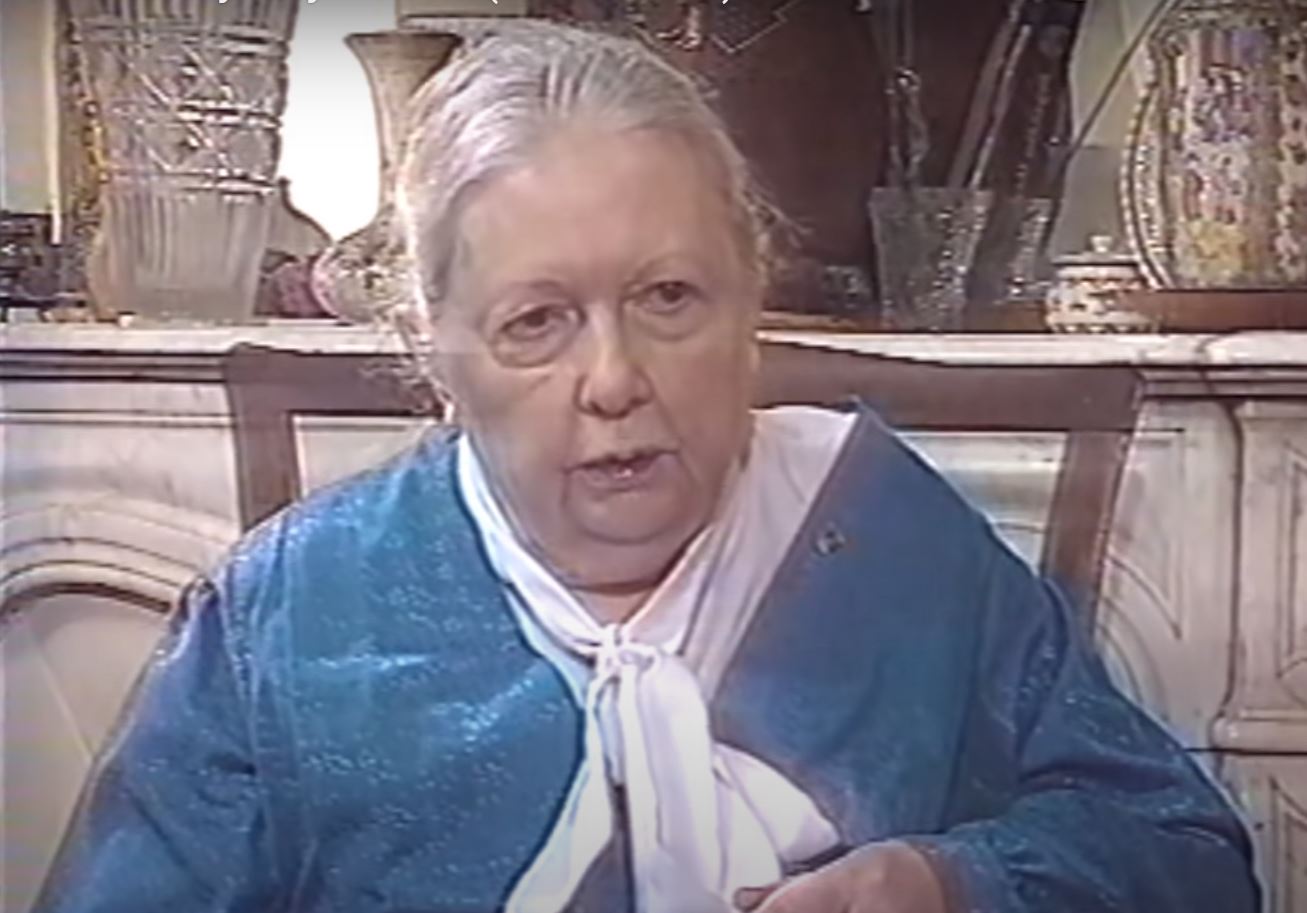
When I took my first steps towards Islam, after reading Iqbal’s book, you can imagine it was not easy. I had been raised in the Catholic religion by a grandmother of Anglican origin. I had a Jewish husband. I had the feeling I was doing something mad, and I was sometimes all the more at a loss because I had no one to guide me. It would happen that I asked in my prayer: ‘Tell me what I must do! Send me a sign’…
That sign, I received in the form of a dream. I dreamt that I was buried and, by a sort of doubling, I could see my tomb, a tomb such as I had never seen and on which my first name, Eva, was written in Arabic or Persian characters, which gave Hawa. It seemed strange to me and, while still asleep, I was telling myself: ‘But come now, I am not dead.’ To convince myself of it, I wiggled my toes.
When I woke, I remember saying to myself: ‘Well! my girl, you asked for a sign and here it is: you will be buried as a Muslim.’
I forgot that dream and, quite naturally, I continued on my path in Islam. Fifteen years later, I made my first journey to Istanbul. There I met one of the whirling dervishes whom, a few years earlier and with UNESCO’s agreement, I had brought to the city theatre. He was an architect by trade for, as you doubtless know, the dervishes, far from being monks, lead the life of everyone else, have families and trades. So this friend said to me: ‘You who take such an interest in Rumi, you should come and see the works I am directing in a former dervish retirement home that has become a museum.’ I went, and I had to walk over heaps of rubble, filth and rusted iron. My friend had to give me his hand and we clambered over all of it. The great gate was broken and there was, at the far end of a kind of courtyard, a little pavilion that the workmen were restoring. I was a little worried, I admit, and I was thinking about not tearing my stockings and not twisting my ankle, when suddenly my heart stopped beating. Right in front of me, I saw the tombstone I had dreamt of. Exactly the same, except that my first name was not engraved on it. I asked the architect: ‘Whatever is that strange stone?’ and he answered that it was a woman’s gravestone. ‘What we are clearing away here’, he added, ‘is the cemetery of women who, during his lifetime, were disciples of Rumi and wanted to be buried here. This cemetery was left abandoned for centuries. We are going to run the bulldozer over it and put flowers in its place.’
One day, as soon as I arrived in Konya, I rushed to see a sama’. It was in a large gymnasium lit by neon lights, and there were people at the entrance drinking Coca-Cola while others tried to sell little golden-brass dervishes. The sama’ itself was as beautiful as ever but, well, that was not it. My heart was heavy and I left before the end. As I entered my hotel room, I caught myself murmuring, addressing Rumi: ‘Really, I would so like to see something other than this caricature’; at that very moment the telephone rang and I was told: ‘Madam, someone is asking for you.’ I said it was not possible because I had told no one of my arrival, but the operator insisted, saying that Dr Eva was wanted. I then heard the voice of one of my dervish friends: ‘So that’s how you ditch us, right in the middle of a sama’?’ I told him what was on my heart and he answered: ‘Do you think it gives us pleasure to put on folklore? Come, we are going to perform a sama’ just for you.’ That is how, at two o’clock in the morning, I attended a sama’ that was the true cosmic dance willed by Rumi, the dizzy round of atoms and planets.
Extracts from Eva de Vitray-Meyerovitch, Islam, l’autre visage*, Le Seuil, 1995, p. 55-56 and p. 77.*