The rectitude of the heart and of deeds: a teaching of the Sufi path
Contents
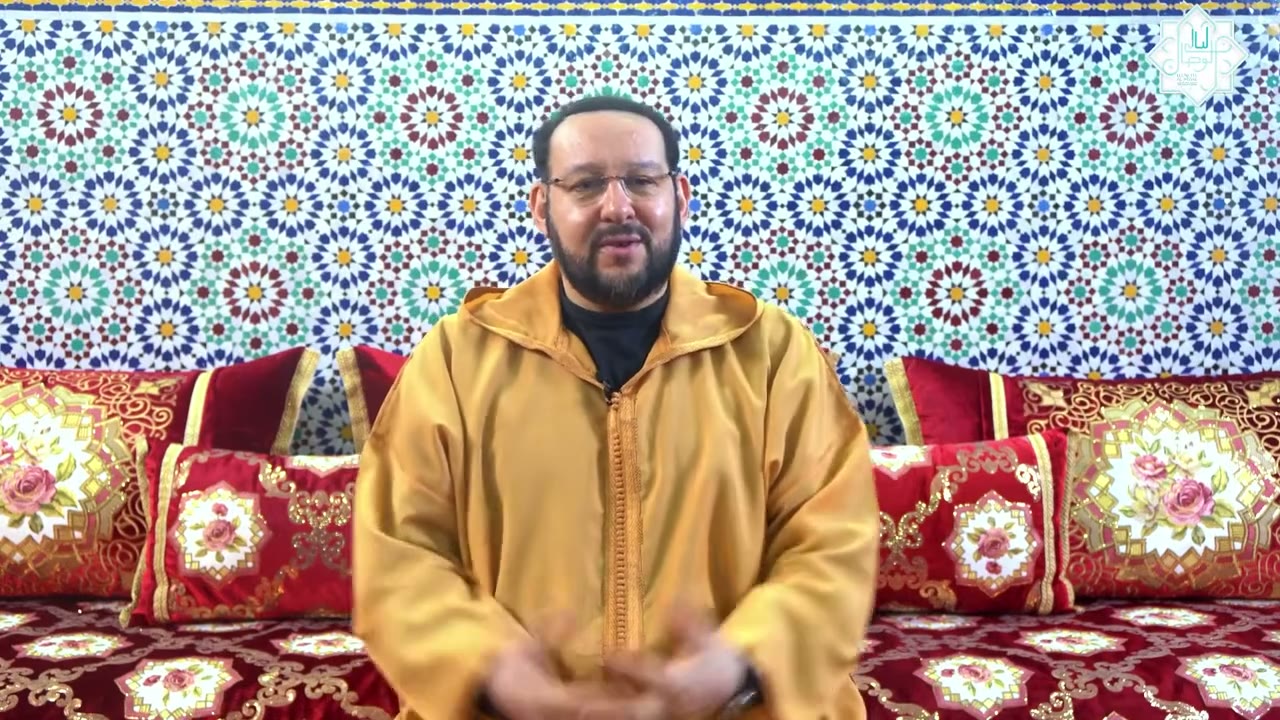
A teaching of Sidi Mounir al-Qadiri Boutchich, shaykh of the path, taken from episode 326 of the series Layali al-Wissal (‘The Nights of Union’), broadcast on 27 September 2026 on the channel of the Al Moultaqa Foundation. Accompanying text written by the editorial team.
Extract of 5 min 53 s (00:54:21 to 01:00:14). Original full video: Layali al-Wissal, episode 326, Al Moultaqa Foundation channel.
What will count on the last day? Not the bank account, not the number of children, not the title on a business card. The Qur’an says it in a single sentence: nothing will be of use except the sound heart, the qalb salim. It is on this simple and vertiginous idea that this teaching of Sidi Mounir al-Qadiri Boutchich, shaykh of the path, opens.
‘Neither wealth nor children’: the verse that puts the heart back at the centre
The starting point is a verse of surah ash-Shu’ara, The Poets (26:88-89): ‘The day when neither wealth nor children will be of any use, save him who comes to Allah with a sound heart.’
Everything we accumulate stops at the threshold. Wealth, offspring, reputation: none of these capitals converts beyond it. What crosses over is the state of the heart itself. Not accumulated knowledge either, nor success visible in the eyes of others. A sound heart. Nothing else.
The verse does not speak of a sentimental organ. In Qur’anic vocabulary, the heart (qalb) is the seat of consciousness, of intention, of spiritual perception. The word salim denotes what is sound, whole, unharmed: a heart rid of what weighs it down.
Perfecting noble character: the prophetic mission in one sentence
The Prophet, may God’s peace and blessings be upon him, summed up his own mission in one sentence, reported in Ahmad’s Musnad and Malik’s Muwatta’: ‘I was sent only to perfect noble character.’
One sentence, and the whole of religion holds within it. As the teaching recalls, the human being was made a trustee on earth, charged with making it prosper through good. That trust is not carried by knowledge alone. It is carried by a purified heart.
What God truly looks at
In an authentic hadith reported by Muslim, the Prophet, may God’s peace and blessings be upon him, declares: ‘Allah does not look at your appearances or your possessions, but He looks at your hearts and your works.’
Two things retained, two things set aside. Set aside: appearance and possession, everything that is displayed. Retained: the heart and the deed. The teaching adds a precision that changes the reading: the heart and the deed are not two separate things. The deed is the heart encountering the limbs.
The deed is the heart encountering the limbs
This is the teaching of Imam al-Ghazali in his Ihya’ ’ulum ad-din, taken up here: noble character is not added to the human being like a varnish. It is the fruit of what has been cultivated within.
Virtue cannot be glued onto behaviour. When the heart is upright, the deed is upright as well; when inwardness is good, the work becomes good, and the human being becomes sincere towards Allah as towards creatures. The Qur’an formulates it through the criterion of nobility, in surah al-Hujurat, The Chambers (49:13): ‘O men! We created you from a male and a female, and We made you into nations and tribes so that you might know one another. The noblest among you in Allah’s sight is the most God-fearing.’
Neither appearance, nor wealth, nor rank. Only what the heart has become.
Rectitude is worked out in daily life
The uprightness of the heart is not confined to polite speech. It becomes a way of treating every person one meets, and the teaching unfolds it in concrete terms: merciful at home, trustworthy at work, sincere in relationships, rigorous in responsibilities, just in disagreement, merciful again when one holds power over others.
There is a logic at work behind these virtues. Probity creates trust. Sincerity produces reform. Rigour produces quality. Justice preserves right. And responsibility leads the human being to fulfil his duty even when no one is watching. Rectitude is not a social posture: it is what holds when the gaze of others is absent.
Sufism, or excellence become conduct
The teaching then names the whole by its name: ‘This is the meaning of Sufism: the station of excellence and its goal.’
Excellence, ihsan, refers to the hadith of Jibril reported by al-Bukhari and Muslim: to worship Allah as if one saw Him, for if one does not see Him, He sees us. In Sidi Mounir’s teaching, as in the whole Qadiriya Boutchichiya path, this station is anything but abstract. It shows itself in plainly visible effects: he who knows Allah does not accept being a source of harm; he who purifies his soul does not put his own interest above that of others; he who feels the weight of the trust entrusted to him does not betray it.
Presented in this way, tasawwuf is neither a folklore nor a metaphysics reserved for initiates. It is an ethic of presence to the world, verifiable in the way one treats a relative, a colleague, a stranger.
Being useful to people
The talk closes with a hadith reported by at-Tabarani in al-Mu’jam al-Awsat, judged good (hasan): ‘The people most beloved of Allah are those most useful to others.’
A sound heart shows itself in the good it does. The teaching ends, as is customary at the gatherings of the path, with an invocation: may God purify hearts before judging deeds, make knowledge a service and strength a responsibility. A prayer is addressed for the kingdom of Morocco, for His Majesty King Mohammed VI and for the crown prince Moulay El Hassan, then for peace throughout the world.
From the Qur’anic station of the sound heart to the conduct of every day, the path traced is that of suluk, the spiritual wayfaring as the path transmits it. To go further in discovering the Qadiriya Boutchichiya path, one can read the presentation of the tariqa, the page on the spiritual guide, or come and attend a dhikr session in Paris as in the other cities of France. The frequently asked questions answer the questions of the first steps.
Frequently asked questions
What is the qalb salim?
The qalb salim, literally ‘the sound heart’, denotes in the Qur’an the heart purified of what weighs it down: pride, self-interest, duplicity. It is the only possession that remains of use on the day of judgement, according to surah ash-Shu’ara (26:88-89).
Which Qur’anic verse speaks of the sound heart?
Verses 88 and 89 of surah ash-Shu’ara, The Poets (surah 26): ‘The day when neither wealth nor children will be of any use, save him who comes to Allah with a sound heart.’
What is ihsan in Sufism?
Ihsan, excellence, is the highest station of faith according to the hadith of Jibril: to worship Allah as if one saw Him, or knowing that He sees us. In Sufism, it denotes the quality of a conduct in which presence to God translates into just and useful deeds.
What is the Qadiriya Boutchichiya path?
The Tariqa Qadiriya Boutchichiya is a Sufi path stemming from the Qadiriya lineage, born in Morocco and present in France, which teaches the wayfaring towards God through the purification of the heart, the practice of dhikr and uprightness in daily life. Its spiritual guide is Sidi Mounir al-Qadiri Boutchich, the eldest son of Sidi Jamal.