
Al-Sari al-Saqati (772-867), the merchant of tawhid
Abu al-Hasan al-Sari ibn al-Mughallis al-Saqati (772-867) lived in Karkh, the quarter of Ma’ruf. His family name denotes a trade: saqati, the dealer in second-hand clothes, his father’s business which he carried on. The tradition says it was in his shop, on a day when Ma’ruf asked him to clothe an orphan, that his life turned: he fulfilled the task and received the prayer that committed him to the path.
The first to speak of tawhid in technical terms
The early biographers count him among those who gave Sufism a language after the age of pure asceticism: he was, it is said, the first of his time to speak on the reality of tawhid, on the states (hal) and the stations (maqamat), and his wara’, his scrupulosity, became proverbial. A friend of Bishr al-Hafi and an interlocutor of al-Harith al-Muhasibi, he travelled through Syria and as far as the Byzantine front before settling in Baghdad in 833.
The uncle who formed al-Junayd
His decisive trace is at once familial and spiritual: al-Junayd, his nephew, was his pupil. Nearly all that we know of him comes to us through the sayings al-Junayd reported; he thus bears a discreet paternity over the doctrine of sobriety that his nephew later fixed. He died in Baghdad in 867 (the sources hesitate between 865 and 871) and was buried in the cemetery of Shuniziyya, near his master.
His place in the chain
The seventh link of the silsila, between Ma’ruf al-Karkhi and al-Junayd, he marks in the path the passage from asceticism to the knowledge of the heart.
Further reading
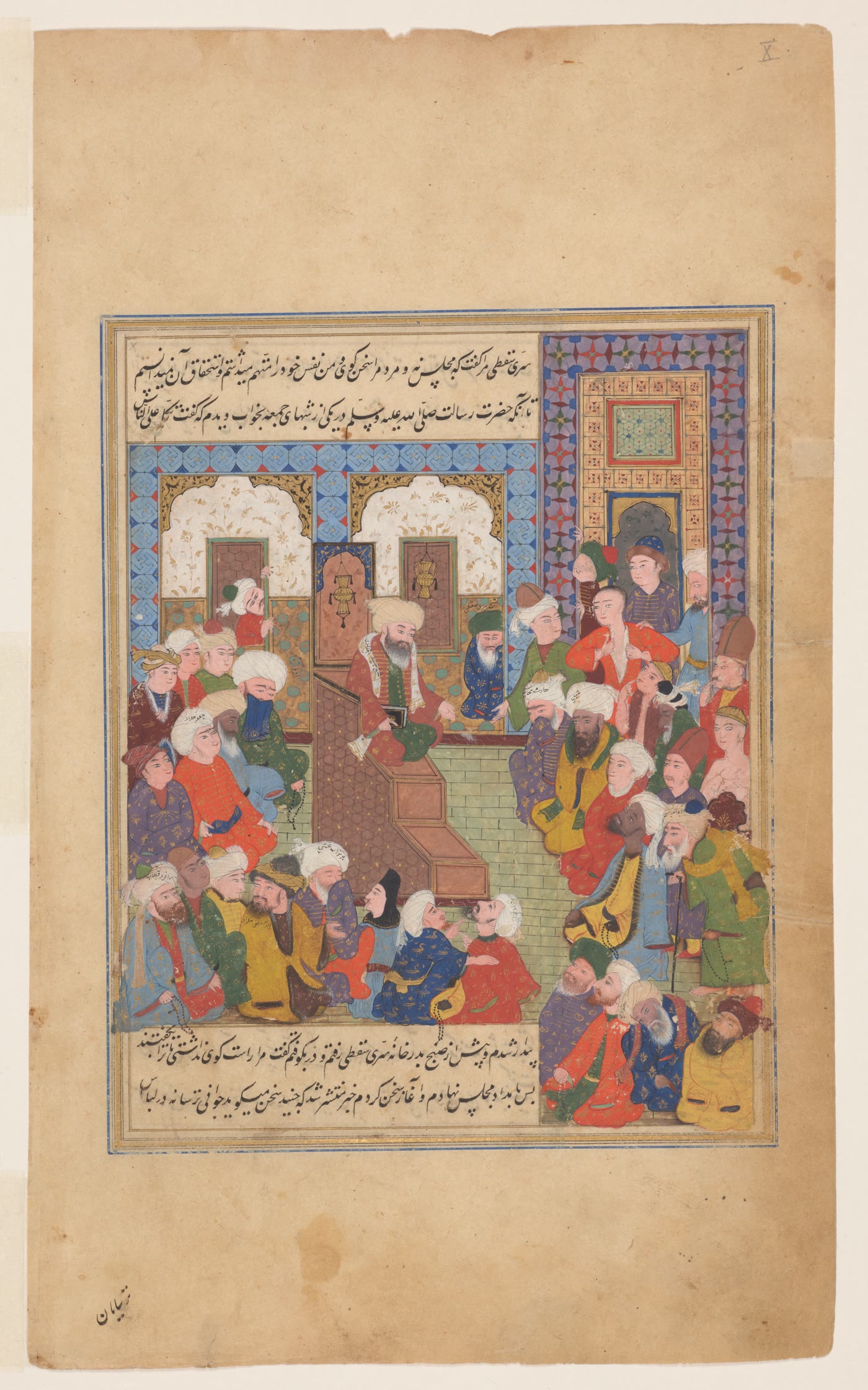
Image: al-Junayd inviting a young Christian to Islam at the assembly of the Sufis, in the presence of al-Saqati; miniature from Jami’s manuscript Nafahat al-uns (sixteenth century, Chester Beatty Library), public domain, via Wikimedia Commons.