
Ma'ruf al-Karkhi (c. 750-815), the saint of Karkh
Ma’ruf ibn Firuz al-Karkhi (born about 750-760, died 815 or 820) is the first great saint of Baghdad. Born into a non-Muslim family of Karkh, the western quarter of the city, the tradition says that he embraced Islam young, in the company of the imam ’Ali al-Rida, whose servant he became. His name remains attached to the quarter, to the cemetery and to the mosque that still bear it.
The love that is not exchanged
The early collections make him the apostle of a love without bargaining. He taught that the love of God is neither given nor received in exchange for anything, not even paradise; in the narratives he is forever running to answer the call of the poor and the destitute of Karkh, whose patron saint he became. A recent SOAS thesis describes him as the founding figure of Baghdad’s ascetic circle, at the point where asceticism turns into mysticism.
The link of the silsilas
A disciple of Dawud al-Ta’i, he was the master of al-Sari al-Saqati: through him the chain passes from the Kufa of the first ascetics to the Baghdad of high Sufi culture. Many paths claim through him a filiation that goes back to the Prophet’s family, the ‘golden chain’.
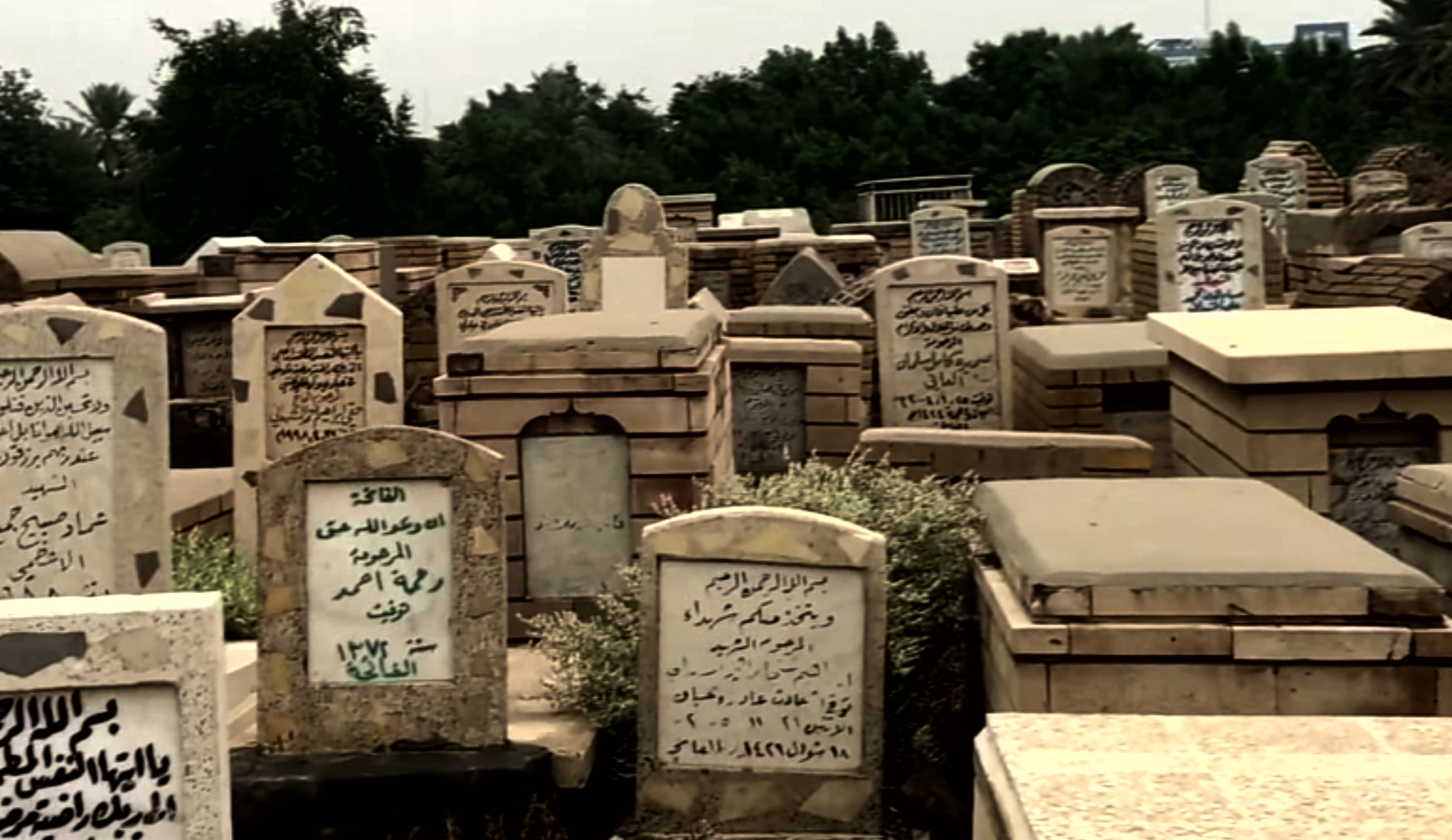
He rests in the cemetery of Shuniziyya, renamed after him, at Karkh; his mosque-mausoleum, rebuilt under the caliph al-Nasir in 1215-1216, remains a place of visitation.
His place in the chain
The sixth link of the silsila, between Dawud al-Ta’i and al-Sari al-Saqati, he stands in the path as the love that asks for nothing in return.
Further reading
Image: the Sheikh Ma’ruf cemetery at Karkh (Shuniziyya), where Ma’ruf, al-Saqati, al-Junayd and al-Shibli rest; photograph by Yusuf Asar Yathar, CC BY 4.0 licence, via Wikimedia Commons.