
Al-Junayd al-Baghdadi (c. 830-910), the master of the community
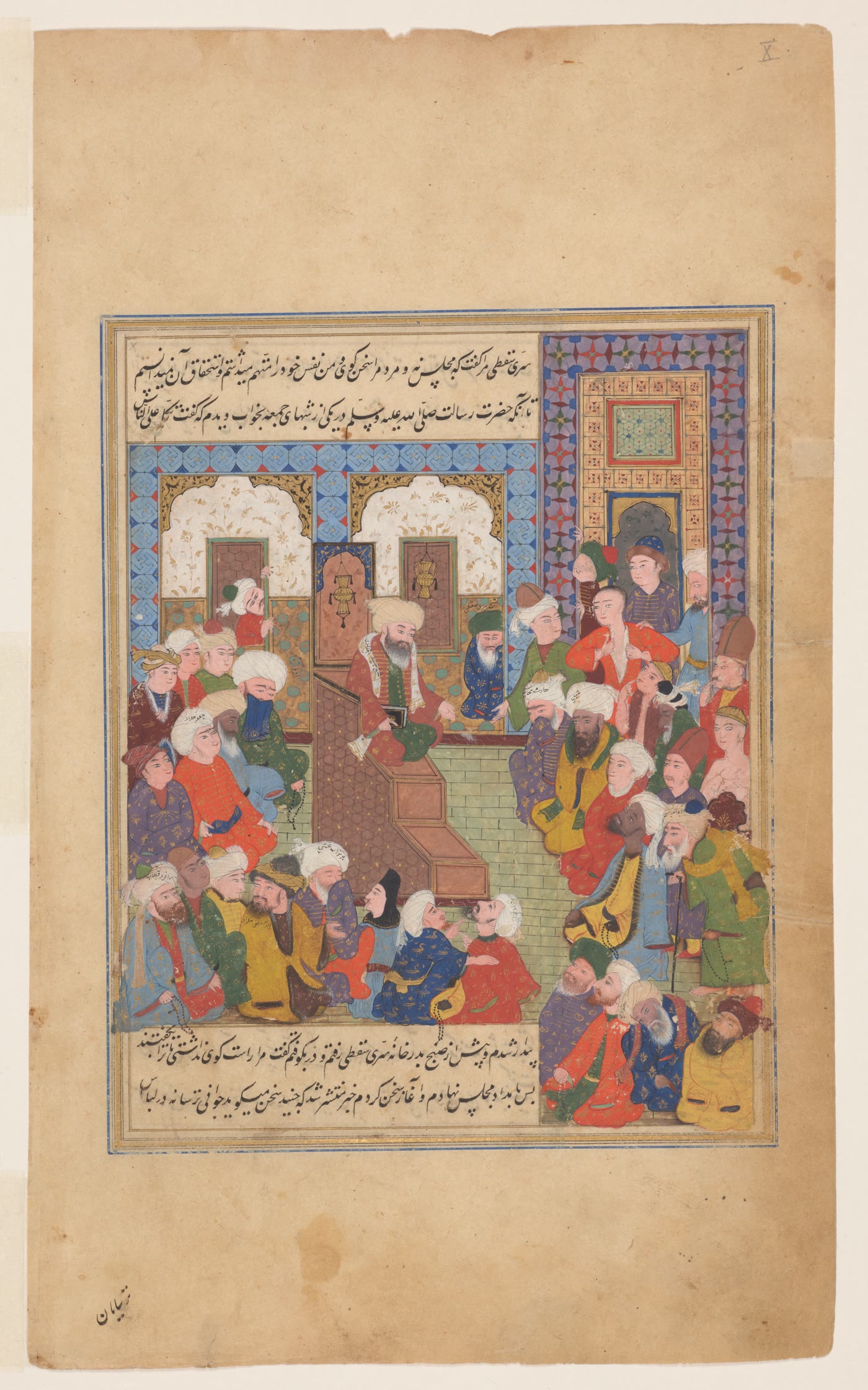
Abu al-Qasim al-Junayd ibn Muhammad al-Baghdadi (c. 830-910) holds a place in the history of Sufism that nobody shares: sayyid al-ta’ifa, ‘the master of the community’, a title the tradition gave him almost unanimously. Nearly all the great paths trace their chain back through him.
The jurist of the heart
The nephew and pupil of al-Sari al-Saqati, he was also the disciple of al-Harith al-Muhasibi and of al-Kharraz, and he sat as a judge in the circle of the Shafi’i jurist Abu Thawr. That background matters: his mystical science always spoke in a jurist’s language, measured, giving nothing away. Al-Qushayri cites him more than any other authority in his Risala; al-Hujwiri calls him ‘the imam of the imams’; ’Attar devotes to him one of the longest notices of the Memorial of the Saints.
The doctrine of sobriety
His decisive contribution is the doctrine of sahw ba’d al-sukr, sobriety after intoxication: the ecstatic state is not the end. The wayfarer annihilated in the divine attentiveness (fana’) must come back to ordinary consciousness, to social obligation, to daily worship, and carry the fruits of what he has seen into a vessel that can hold them. That return is not a fall: it is a station above the summit. The whole difference between the ‘sober’ Sufism of Baghdad and the later ecstatic paths lies in that formulation.
His school formed al-Shibli, al-Nasrabadhi and a generation of masters. He died in Baghdad in 910 and was buried in the cemetery of Shuniziyya, where his uncle and his great-uncle in the path already rested.
His place in the chain
The eighth link of the silsila, between al-Sari al-Saqati and al-Shibli, he is the point at which everything converges: most existing paths name him.
Further reading
Image: al-Junayd inviting a young Christian to Islam at the assembly of the Sufis, in the presence of al-Saqati; miniature from Jami’s manuscript Nafahat al-uns (sixteenth century, Chester Beatty Library), public domain, via Wikimedia Commons.