The zawiyas of Fes in the topography of the sacred

A report from the Moroccan press, reproduced from the tariqa.fr press review.
A spiritual itinerary
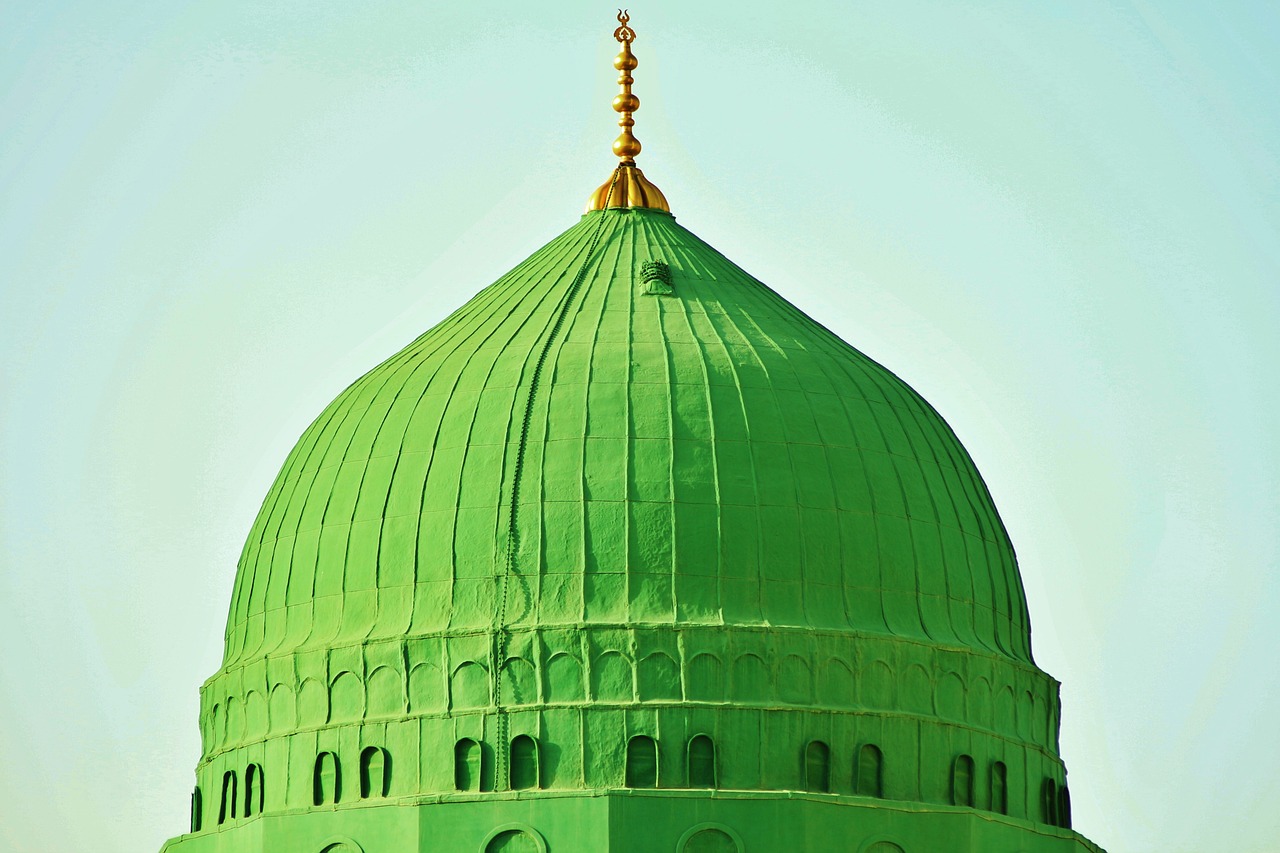
At the hour of Ramadan, the zawiyas, small domed sacred edifices, are the favoured place of silent meditation and mystical initiation for the people of the bench (Ahl al-Suffa).
Adepts and disciples, but also the passing dabbler, flock there in great numbers after the third prayer of the day, ’asr, to perform the ritual of litanies, invocations and readings of the Qur’an.
Situated in the districts of the medina, Rcif, Blida, Bab Ftouh and Zqaq Lahjar, the thirteen zawiyas of Fes are historic.
They have often made religious news through the behaviour of the founding father, who distinguished himself either by a spiritual chivalry, a bravery, a spirit of selflessness, of sacrifice, or simply a nobility of gesture.
Over the course of their spiritual itinerary they had acquired a considerable politico-religious importance.
Always attached to the materiality of a saintly man, the zawiyas of Fes are known for their organisation, their earnestness and their self-denial.
The most famous are of course those of Sidi Ahmad al-Tijani, Moulay Larbi al-Darqawi, and of Moulay Abd al-Rahman al-Qadiri, but the very first is the zawiya of Moulay Ahmad al-Sqalli.
These religious orders, as Prof. Tayeb Boutbouqalt points out, on the example of the Franciscans and the Benedictines, are a heritage of the second-third century of the Hegira, from the Ahl al-Suffa of Medina (the people of the bench).
They appeared in Fes around 1745 and constituted themselves into a pole thanks to the development of Sufism (Tasawwuf), the mystical current characterised by the interior dimension of islam and the effacement of appearances in the worship of God. Since then, circles of meditation and adoration of particularist tendencies have flourished, and spiritual paths (Tariqa) have proliferated around a guiding figure (a Shaykh).
The first is Moulay Ahmad al-Sqalli (1700-1763). This perfume seller of the Attarine district devoted himself in his shop to the reading of books of initiation. In the town of Ouazzane, where he went on an initiatic journey, he received the baraka of the master Moulay Tayeb al-Wazzani. But it was only in Mecca that his encounter with a Shaykh from Egypt proved decisive. Through this Shaykh, the Shadhiliyya Khalwatiyya path was introduced into Morocco for the first time.
On his death, his disciples bought a house and buried him there. It became a zawiya on account of the sanctuary, and it is still thriving. Communal invocations (wadifa) are still practised there once a week, generally on Thursday evening and very recently on Friday too. The invocations (dhikr) and the oratorio (sama’) follow a studied rhythm meant to lead to the ecstatic dance (jadba), controlled by a muqaddam or another person from the gathering who takes his place in the middle of the circle of disciples.
The most orthodox is Moulay Larbi al-Darqawi (1760-1823). His brotherhood knew such a considerable extension and influence that the Darqawa, in the nineteenth century, had constituted a politico-religious power with which the ruling authority had to reckon. Today, almost abandoned, this zawiya lives folded in on itself and is only open on Fridays for the direct descendants of the spiritual master.
The most famous and the most eclectic is the Tijaniyya zawiya in the Blida district. It was founded by Sidi Ahmad al-Tijani, a great Sufi master of Ain Mahdi (Algeria), who came to Fes in 1758, at the age of 21, to complete his theological training.
He also received initiation from the master of Ouazzane. Later, driven out by the Turks, he chose Fes in 1798 as his place of asylum.
The spiritual path he introduced is the one that left the deepest mark on the history of the Maghreb and of Africa.
Its disciples particularly included the class of aristocrats and intellectuals.
History recalls in this connection that certain Alawite sultans, among them Moulay Slimane (1792-1822) and above all Abd al-Hafid, were adepts of this Tariqa and firmly supported the current until its apogee.
The Tijani community gathers for two invocations a day, one at the time of the third prayer of the day (’asr) and the other at the fourth (maghrib). These collective invocations are led by a muqaddam or one of the direct descendants of Sidi Ahmad. This mother zawiya is particularly visited by people from Senegal and Mauritania before they continue their journey on pilgrimage to Mecca. Several cells of the zawiya exist throughout Morocco, particularly in Rabat and Casablanca, in certain European countries and, indeed, in black Africa.
Thus the history of Fes is bound up with that of its zawiyas. And Fes, a holy city, in the anthropologist Faouzi Skali’s expression, becomes the zawiya city.
As a reflection of the topography of the sacred, the city, through its political and civilisational history, facilitated the emergence and implantation of this kind of structure. The zawiyas, places of initiation and mystical experience, evolved into circles of study and community gatherings, asylums for travellers and the poor, and exercises of culture. Such centres became nuclei for the diffusion of a culture, embryos of community creation, organising themselves more or less explicitly around a model of sanctity, a central figure.
Materialised by the existence of a small edifice sheltering the buried body of the founding father, the zawiya symbolises the Pantheon of the whole brotherhood. It is a horm, a right of asylum that no one would dare infringe.
Zawiya or brotherhood: the spiritual paths differ.
Yet the backdrop is faith in divine unity. Each person enters it freely, doubtless drawn by the charisma that gives the visitor of a day the desire to take an interest in it, and why not to stay.
Further reading
Further reading
- Royal offerings at the sanctuary of Moulay 'Abd al-Salam ibn Mashish
- Les épreuves prophétiquesThe prophetic trials (2/2): the maturing of souls
- Les épreuves prophétiquesThe trials of the prophets (1/2): the crucible of the chosen one
- La vie du ProphèteThe life of the Prophet Muhammad (11/11): the conquest of Mecca and the death of the Prophet