
Al-Hasan al-Basri (642-728), the heir of the first piety
Al-Hasan al-Basri (642-728) is the hinge figure between the time of the Prophet, peace be upon him, and that of the Sufi masters. Born in Medina to Persian freedmen, he belongs to the generation of the tabi’un, those who knew the Companions without knowing the Prophet: the tradition reports that he frequented ’Ali ibn Abi Talib and that he met more than a hundred Companions.
The preacher of Basra
He settled in Basra, the raw, fast-growing garrison city of early Islam, and spent eighty years there preaching, giving judgements and practising a severe asceticism. The early sources paint him as the greatest orator of his age: al-Jahiz said he had no rival among the preachers. His sermons, his letters to the Umayyad caliph ’Abd al-Malik, his aphorisms on self-examination (muhasabat al-nafs) have come down the centuries.
Posterity has claimed him for everything: founder of Sufism, grammarian, mu’tazilite before the letter, predestinarian and free-willer. The historian Suleiman Mourad has shown that each movement shaped his figure to its own measure. One thing is certain: his ideal of zuhd, detachment from the world lived as a standing attentiveness to God, nourished the whole tree of the masters who came after.
The link of the silsilas
The chains of transmission place him after ’Ali ibn Abi Talib, by way of companionship and spiritual inheritance, and before Habib al-’Ajami, the disciple he converted with a single word. Nearly all the paths invoke him to join the age of the saints to that of the Companions.
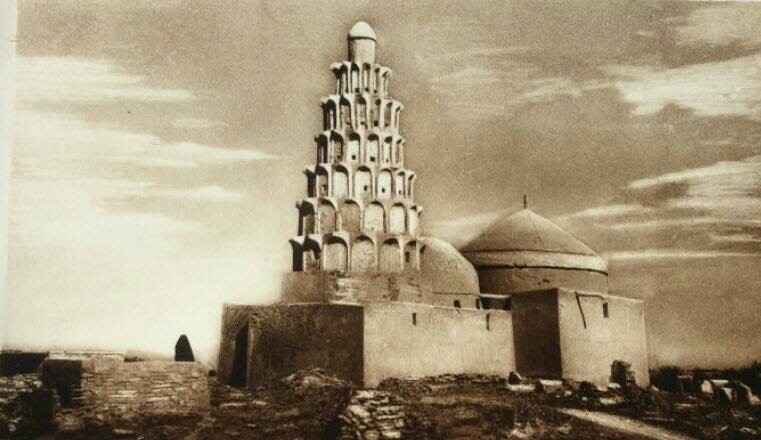
He died in 728 and rests at Zubayr, near Basra, where his mausoleum, crowned by a Seljuk tower of 1185, also shelters the tomb of the great traditionist Ibn Sirin.
His place in the chain
The third link of the silsila, between ’Ali ibn Abi Talib and Habib al-’Ajami, he stands in the path as the master-preacher, the one whose word awakens.
Further reading
Image: the mausoleum of al-Hasan al-Basri at Zubayr; Iraqi Photographic Archives network, public domain, via Wikimedia Commons.